Plastic has become such a normal part of everyday life that most of us hardly notice it anymore. It’s in food packaging, water bottles, takeaway containers, clothing, cosmetics, and even the air we breathe. Over time, these plastics break down into tiny particles known as microplastics—pieces so small that they are often invisible to the naked eye.
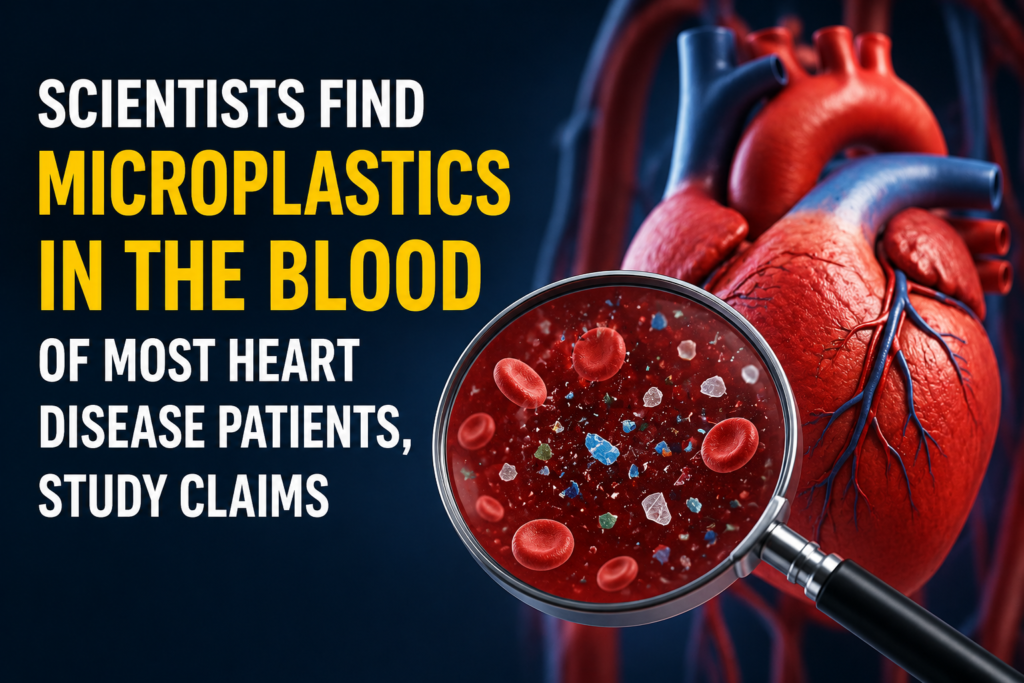
For years, scientists have been trying to understand what happens when these tiny particles enter the human body. A new study has added another piece to the puzzle, suggesting that microplastics were found in the blood of most people living with heart disease.
The findings don’t prove that plastic particles cause heart disease, but they do raise important questions about how everyday exposure to plastic might affect our health in the long run.
What Did the Study Find?
Researchers examined blood samples from patients diagnosed with cardiovascular disease. According to the study, the majority of participants had detectable levels of microplastics in their blood.
The particles included common plastics that many people come into contact with every day through food containers, bottled drinks, synthetic fabrics, and household products.
Scientists are still working to understand exactly how these particles enter the bloodstream. One likely route is through food and drinking water. Another possibility is inhalation, as tiny plastic particles have also been found floating in indoor and outdoor air.
The research has attracted attention because it adds to growing evidence that microplastics are no longer just an environmental issue—they may also be a human health concern.
What Exactly Are Microplastics?
Tiny Pieces of Plastic All Around Us
Microplastics are plastic fragments that measure less than five millimeters in size. Some are intentionally manufactured for industrial use, while many form when larger plastic items slowly break apart through sunlight, heat, and everyday wear.
These particles have been detected in oceans, rivers, soil, seafood, drinking water, table salt, and even household dust.
That means avoiding them completely is almost impossible.
Researchers have also identified microplastics in human lungs, the placenta, and blood, showing that these particles can travel throughout the body after exposure.
Does This Mean Microplastics Cause Heart Disease?
Not necessarily.
This is probably the most important point to understand.
The study found an association, not proof that microplastics directly caused heart disease.
Many people with cardiovascular disease also have other well-known risk factors such as high blood pressure, diabetes, smoking, obesity, high cholesterol, or older age. Scientists must carefully separate the effects of these factors before they can say whether microplastics play an independent role.
In other words, the research raises an important question, but it doesn’t provide a final answer.
Why Researchers Are Concerned
Tiny Particles May Trigger Inflammation
Scientists believe microplastics could potentially affect the body in several ways.
Some laboratory studies suggest these particles may contribute to inflammation or oxidative stress, both of which have been linked to cardiovascular disease. Others are investigating whether chemicals attached to plastic particles could interfere with normal body functions.
However, much of this research is still in its early stages.
What happens in laboratory experiments doesn’t always happen the same way inside the human body, which is why larger, long-term studies are still needed.
Everyday Sources of Microplastic Exposure
It’s surprising how many ordinary items can contribute to microplastic exposure.
Some common sources include:
- Bottled drinking water
- Single-use plastic food containers
- Plastic packaging
- Synthetic clothing made from polyester or nylon
- Household dust
- Seafood exposed to polluted water
- Plastic cutting boards and kitchen utensils
This doesn’t mean every plastic item is dangerous, but it does show how widespread plastic particles have become in modern life.
Can You Reduce Your Exposure?
Completely avoiding microplastics isn’t realistic, but small lifestyle changes may help lower your overall exposure.
| Everyday Habit | Why It May Help |
|---|---|
| Drink filtered tap water when possible | May reduce some plastic particles |
| Store food in glass or stainless steel containers | Reduces contact with certain plastics |
| Avoid heating food in plastic containers | Heat may increase chemical migration from some plastics |
| Choose fresh foods more often | Limits packaging exposure |
| Vacuum and dust regularly | Helps remove indoor plastic dust |
These habits aren’t guaranteed to eliminate exposure, but many experts believe they’re sensible steps while research continues.
What This Means for Heart Health
Heart disease remains one of the leading causes of death worldwide, and the biggest proven risk factors haven’t changed.
Maintaining healthy blood pressure, controlling cholesterol, exercising regularly, avoiding tobacco, managing diabetes, eating a balanced diet, and getting enough sleep are still the most effective ways to protect your heart.
The discovery of microplastics in blood is certainly interesting, but it shouldn’t distract from these well-established habits.
Instead, it reminds us that our environment and our health are more closely connected than we once believed.
More Questions Than Answers—For Now
Research on microplastics is moving quickly, and scientists continue to uncover surprising findings. Detecting plastic particles in the blood of many heart disease patients is an important observation, but it’s only one part of a much larger scientific picture.
Future studies will need to determine whether these particles contribute to heart disease, simply reflect everyday exposure, or interact with other health conditions in ways we don’t yet understand.
For now, the study offers another reason to pay attention to environmental health while continuing to focus on the everyday habits that are already known to support a healthy heart.