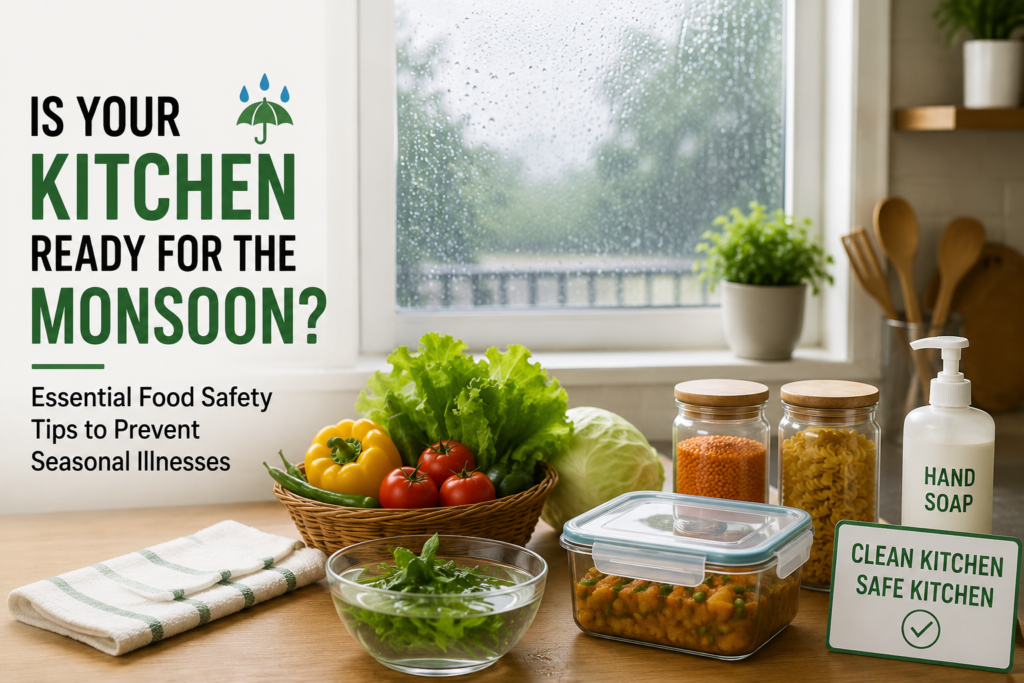
The arrival of the monsoon is something many of us wait for. The cool breeze, the sound of rain on the windows, and a hot cup of tea with crispy snacks—it all feels comforting. But while the rainy season brings relief from the summer heat, it also creates the perfect environment for bacteria, mold, and germs to grow.
That’s why this time of year needs a little extra attention in the kitchen.
Food tends to spoil faster during the monsoon because of increased humidity. Even ingredients that normally stay fresh for days may not last as long. A tiny mistake, like leaving cooked food out for too long or storing vegetables while they’re still damp, can sometimes lead to food poisoning or stomach infections.
The good news? You don’t need expensive products or a complete kitchen makeover. A few simple habits can go a long way in keeping your family safe.
Why Food Safety Becomes More Important During the Rainy Season
Warm temperatures mixed with high humidity create ideal conditions for harmful bacteria and fungi. That’s why stomach infections, diarrhea, food poisoning, and digestive problems become more common during the monsoon.
You may have noticed that bread gets moldy quicker or leftovers start smelling different much sooner than usual. That’s not your imagination—it really happens.
This is exactly why cleaning, cooking, and storing food properly matters even more during this season.
Keep Your Kitchen Dry Whenever Possible
Moisture Is the Enemy
One thing many people overlook is excess moisture.
Wet kitchen towels, damp shelves, and water collecting near the sink can quickly become breeding grounds for bacteria and mold. After washing dishes, wipe down the countertop and sink area instead of leaving water to dry on its own.
It sounds like a small habit, but it makes a noticeable difference over time.
Don’t forget to wash kitchen cloths regularly too. A cloth that smells even slightly musty is probably carrying more germs than you think.
Wash Fruits and Vegetables Carefully
Fresh produce often carries extra dirt during the rainy season.
Leafy vegetables, herbs, and fruits should always be washed under running water before cooking or eating. Some people like soaking vegetables for long periods, but a good rinse under clean water is usually enough for most items.
If you’re eating fruits raw, dry them with a clean cloth before storing them in the refrigerator.
Store Food the Right Way
Don’t Leave Cooked Food Sitting Out
This is probably one of the biggest mistakes people make.
After lunch or dinner, it’s easy to leave leftovers on the dining table for a few hours. During the monsoon, that isn’t a great idea.
Once food has cooled slightly, transfer it into clean containers and refrigerate it. When you’re ready to eat it again, reheat it thoroughly until it’s steaming hot.
Food that has been sitting out all day is better thrown away than risked.
Pay Attention to Your Refrigerator
A refrigerator helps keep food safe, but only if it’s working properly.
Avoid stuffing it so full that air can’t circulate. Wipe up spills quickly, check expiry dates regularly, and throw away food that’s been forgotten at the back of a shelf.
If you notice an unpleasant smell inside the fridge, clean it instead of simply placing a deodorizer inside.
Sometimes the smell is a sign that spoiled food is hiding somewhere.
Separate Raw and Cooked Foods
Avoid Cross-Contamination
Raw meat, fish, and poultry naturally carry bacteria that shouldn’t come into contact with cooked food.
Use separate chopping boards whenever possible, or wash the board thoroughly with hot, soapy water before using it again.
The same rule applies to knives and kitchen utensils.
It’s one of those habits that seems unnecessary—until it prevents a stomach infection.
Drink Safe and Clean Water
Rainy weather can sometimes affect water quality.
Always use clean drinking water for cooking, making ice, washing fruits, and preparing beverages. If you’re unsure about your water source, boil it or use a trusted water purifier.
Many seasonal illnesses begin with contaminated water rather than contaminated food.
Don’t Ignore Expiry Dates
Humidity can shorten the shelf life of packaged foods after they’re opened.
Check spices, flour, snacks, cereals, and dry ingredients regularly. If something smells strange, has changed color, or shows signs of insects or mold, don’t try to “save” it.
Replacing one packet of food is much cheaper than treating food poisoning.
Everyday Kitchen Habits That Really Help
You don’t need to change everything. A few everyday habits are enough to reduce the risk of seasonal illnesses.
| Simple Habit | Why It Matters |
|---|---|
| Wash hands before cooking | Prevents germs from spreading |
| Keep kitchen counters dry | Reduces mold and bacterial growth |
| Refrigerate leftovers quickly | Slows bacterial multiplication |
| Wash vegetables thoroughly | Removes dirt and contaminants |
| Reheat leftovers completely | Kills many harmful bacteria |
| Empty the kitchen bin daily | Prevents insects and bad odors |
None of these take much time, but together they create a much safer kitchen.
Be Careful with Street Food During the Monsoon
The rainy season often makes fried snacks and spicy street food even more tempting.
There’s nothing wrong with enjoying them occasionally, but choose places that maintain good hygiene. Food left uncovered or prepared with unclean water can increase the risk of stomach infections.
If you’re unsure, homemade versions are often the safer option—and honestly, they usually taste better too.
Small Changes Make a Big Difference
Monsoon cooking doesn’t have to be stressful. Most food safety problems happen because of everyday habits that are easy to overlook. Wiping away moisture, storing leftovers properly, washing fresh produce, and keeping your refrigerator clean may seem like small tasks, but together they help protect your family from seasonal illnesses.
The rainy season is meant to be enjoyed with warm meals, comforting recipes, and time spent indoors—not with avoidable stomach problems. A little extra care in the kitchen is often all it takes to keep those rainy-day memories happy and healthy.