
Almost everyone has had this moment. You grab a packet of chips from the store, excited to enjoy your favorite snack, only to open it and wonder, “Wait…where are the rest of the chips?”
It can feel like the packet is half full of air and only half full of chips. Some people even joke that they’re paying for air instead of food.
Honestly, it does look a little disappointing the first time you notice it.
But here’s the interesting part: that empty space isn’t there to trick you. In fact, it serves a very important purpose.
It’s Not Actually Filled with Air
This surprises a lot of people.
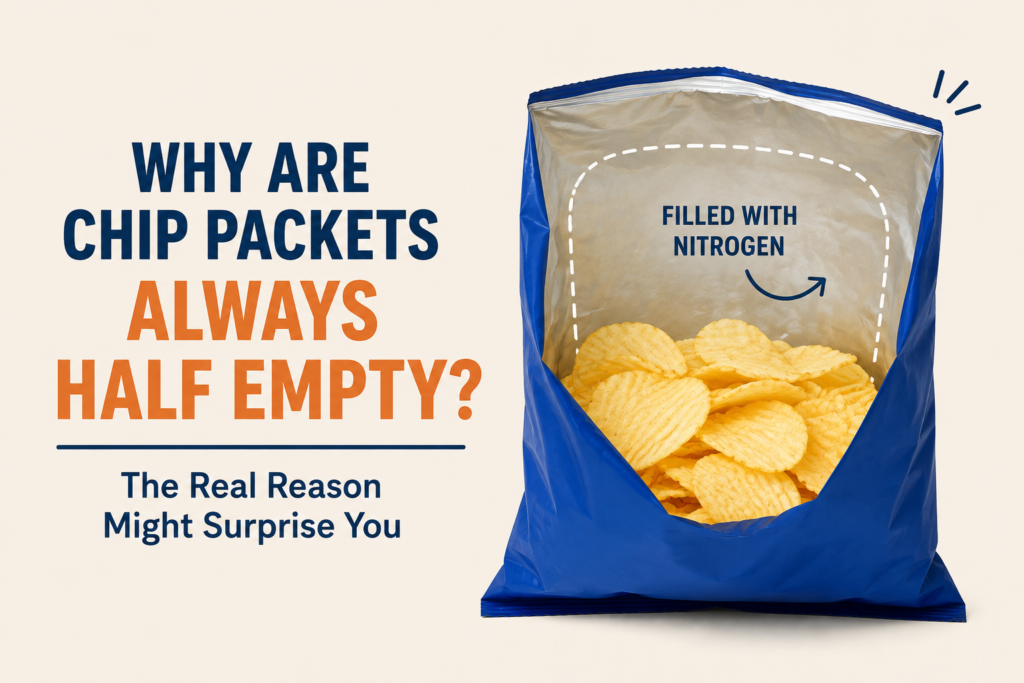
The space inside most chip packets isn’t filled with ordinary air. Manufacturers usually fill the packet with nitrogen gas.
Nitrogen is colorless, odorless, and safe for food packaging. More importantly, it helps keep the chips fresh.
Regular air contains oxygen, and oxygen is one of the biggest reasons chips become stale. It reacts with the oils in the chips, making them lose their crisp texture and fresh taste over time.
Nitrogen, on the other hand, slows this process down. That’s why your favorite chips can stay crunchy for weeks or even months before you open the packet.
The Empty Space Protects the Chips
Think of It Like a Cushion
Imagine stacking hundreds of packets in a truck and sending them across the country.
Without that extra space inside, the chips would constantly bump into one another during transport. By the time the packet reached the store, you might open it and find nothing but tiny broken pieces.
The nitrogen-filled space acts like a soft cushion. It absorbs shocks while the packets are moved, loaded, and transported.
So although the bag may look half empty, that space is actually helping keep the chips in one piece.
Are Companies Trying to Fool Customers?
This is probably the biggest question.
The short answer is—not exactly.
Chip companies are required to mention the net weight of the product on the package. That weight tells you how many grams of chips you’re buying, regardless of how large the packet looks.
The size of the bag can sometimes make it appear as though you’re getting more than you actually are, which is why many people feel disappointed after opening it.
That’s why checking the weight printed on the packet is usually a better way to compare products than judging by the size of the bag.
Why Not Use Smaller Packets Instead?
At first, using a smaller packet sounds like an easy solution.
But food packaging isn’t quite that simple.
Packaging Needs Room
Chip packets need enough space for sealing, printing, transportation, and display on store shelves. A slightly larger packet also helps protect the chips from being crushed.
If manufacturers packed the chips tightly into a smaller bag, they would likely break much more easily before reaching customers.
So the bag size is often designed with both protection and practical handling in mind.
Does Nitrogen Affect the Taste?
Not at all.
Nitrogen doesn’t have a taste or smell. It doesn’t make the chips crispier or change their flavor.
Its main job is simply to reduce oxygen inside the packet and protect the freshness of the snack.
Once you open the bag, nitrogen escapes almost immediately and mixes with the surrounding air.
Why Some Packets Look Emptier Than Others
Not every brand uses the same amount of empty space.
Several things influence how full a packet appears, including:
- The type of chips
- Their shape and thickness
- Packaging machine settings
- Transport distance
- Fragility of the product
Thin potato chips usually need more protection than thicker snacks or puffed products.
So if one brand looks fuller than another, it doesn’t necessarily mean you’re getting more chips.
Is It Called Slack Fill?
You may hear the term slack fill when people discuss food packaging.
Slack fill refers to the empty space inside a package.
Some amount of slack fill is considered normal because it protects the product, allows for manufacturing processes, and helps preserve freshness.
However, if a package contains unnecessary empty space that could mislead customers, consumer protection laws in many countries may treat that differently.
Most well-known snack companies design their packaging to balance product protection with legal packaging requirements.
Next Time You Open a Bag…
The next time you tear open a packet of chips and notice all that empty space, you’ll know there’s more going on than meets the eye.
That “air” is actually nitrogen doing an important job. It’s helping protect the chips from breaking, slowing down spoilage, and keeping them crunchy until they’re ready to eat.
Sure, it would be nice if every packet looked completely full. Most of us wouldn’t complain about getting a few extra chips. But the empty space isn’t simply wasted—it plays a surprisingly practical role in making sure the snack inside reaches you fresh, crisp, and in much better condition than it otherwise would.