Roasted eggplant is one of those foods that feels simple but incredibly satisfying. Whether it’s turned into smoky mashed eggplant, added to salads, spread on toast, or served as a side dish, it brings a rich flavor that many people love. In many homes, especially across Asia and the Mediterranean, roasted eggplant has been part of family meals for generations.
It is also packed with fiber, antioxidants, vitamins, and minerals, making it a healthy addition to your plate. But here’s something that often gets overlooked. The way you roast and eat eggplant can sometimes make a bigger difference than the vegetable itself.
Believe it or not, one common mistake could increase your exposure to harmful compounds and spoil an otherwise healthy meal.
Why Roasted Eggplant Is Good for You
Eggplant is naturally low in calories and contains plenty of dietary fiber, which helps support digestion and keeps you feeling full for longer. It also provides vitamin C, vitamin K, potassium, and small amounts of folate.
One of its biggest health benefits comes from antioxidants, especially a compound called nasunin, which is found mainly in the purple skin. Antioxidants help protect the body’s cells from damage caused by free radicals.
Roasting also gives eggplant its signature smoky taste without needing much oil, making it a healthier cooking method than deep frying.
Still, healthy food can become less healthy if it isn’t prepared properly.
The Common Mistake Many People Make
Eating Burnt or Heavily Charred Eggplant
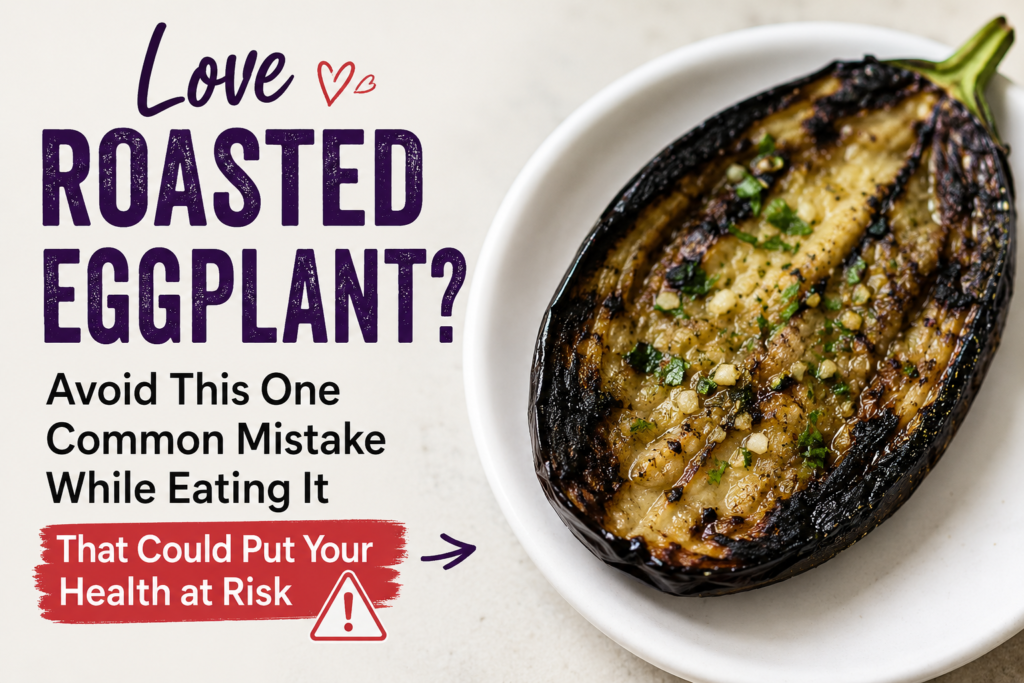
A lot of people enjoy the smoky flavor that comes from roasting eggplant directly over an open flame. There’s nothing wrong with that. The problem begins when the skin and even the flesh become deeply blackened or burnt, and people scrape those burnt parts into the dish.
Those crispy black bits may seem harmless, but excessive charring can create compounds that researchers have linked to potential health concerns when consumed regularly over long periods.
One slightly burnt meal isn’t something to panic about. The concern is making heavily charred foods a regular habit.
If your eggplant has patches of burnt skin, simply peel away the blackened layer and use the soft, roasted flesh inside.
A Little Smoke Is Fine, But Don’t Overdo It
Many traditional recipes call for roasting eggplant over a gas flame because it creates a delicious smoky aroma. That gentle smokiness is perfectly normal.
The goal isn’t to avoid roasting altogether. Instead, avoid cooking it until large portions become completely burnt or carbonized.
A nicely roasted eggplant should feel soft inside with lightly blistered skin—not dry, hard, or completely black throughout.
Another Small Mistake: Using Too Much Oil
Roasted eggplant acts almost like a sponge. It can absorb a surprising amount of oil.
Many people drizzle oil before roasting and then add even more afterward while preparing the final dish. Before you know it, a low-calorie vegetable becomes much higher in calories.
If you’re trying to eat healthier, use just enough oil for flavor. Olive oil or mustard oil, depending on your recipe, works well in moderation.
Sometimes the eggplant tastes just as good with fresh herbs, garlic, lemon juice, or yogurt instead of extra oil.
Choosing Fresh Eggplant Matters Too
Don’t Ignore Signs of Spoilage
Before roasting, take a quick look at the eggplant.
Fresh eggplants usually have:
- Smooth, shiny skin
- Firm texture
- Bright green stem
- No soft spots or mold
If the eggplant feels unusually soft, has a sour smell, or shows signs of mold, it’s better to throw it away.
Cooking cannot always make spoiled vegetables safe to eat.
Easy Tips for Healthier Roasted Eggplant
Making roasted eggplant healthier doesn’t require complicated cooking techniques.
Here are a few simple habits that make a difference.
| Healthy Habit | Why It Helps |
|---|---|
| Roast until soft, not burnt | Reduces unwanted charred compounds |
| Remove heavily blackened skin | Lowers exposure to burnt residue |
| Use oil in moderation | Keeps calories under control |
| Eat with vegetables and protein | Creates a balanced meal |
| Store leftovers in the refrigerator | Helps prevent bacterial growth |
These small changes take almost no extra effort but can make your meal both safer and healthier.
Can Everyone Eat Roasted Eggplant?
For most healthy adults, roasted eggplant is perfectly safe and nutritious.
However, some people may want to be a little careful.
People with Nightshade Sensitivity
Eggplant belongs to the nightshade family. Although uncommon, some people report digestive discomfort after eating nightshade vegetables. If you notice repeated symptoms, it’s worth discussing with your healthcare provider.
People with Kidney Stone Concerns
Eggplant contains moderate amounts of oxalates. Most people don’t need to worry about this, but individuals who have been advised to follow a low-oxalate diet should ask their doctor or dietitian how much is appropriate for them.
Enjoy the Flavor Without the Risk
Roasted eggplant deserves its place on a healthy menu. It’s flavorful, filling, and full of nutrients that support overall health.
The key is keeping the roasting gentle enough to bring out its natural sweetness without turning large parts of it into burnt, blackened pieces. Pair it with fresh herbs, spices, or a squeeze of lemon, and you’ll still get all that wonderful smoky flavor without overdoing the char.
Sometimes, the healthiest cooking habits aren’t about changing what you eat—they’re simply about making small adjustments to how you prepare it.