Have you ever finished a meal and immediately felt like sitting on the couch? Most of us have. After a long day, moving around is usually the last thing on our minds. Yet many people are now making walking after meals a daily habit because they believe it helps with weight loss and fat burning.
It’s a simple idea. Eat your meal, wait a few minutes, and take a short walk. No expensive equipment, no gym membership, and no complicated workout plan.
But does it actually work?
The truth is that walking after meals won’t magically melt away body fat overnight. However, it can support your fitness goals in several ways, especially when done regularly. Sometimes the smallest habits end up making the biggest difference.
Why Walking After Meals Has Become So Popular
Health trends come and go, but walking has never really gone out of style.
Unlike intense workouts, walking feels manageable. Almost anyone can do it, regardless of age or fitness level. That’s one reason people are drawn to post-meal walks.
Another reason is convenience. You don’t have to block out an hour of your day. Even a quick walk around your neighborhood can be enough to get your body moving.
Many people also notice they feel less heavy and sluggish after eating when they take a short walk instead of sitting down right away.
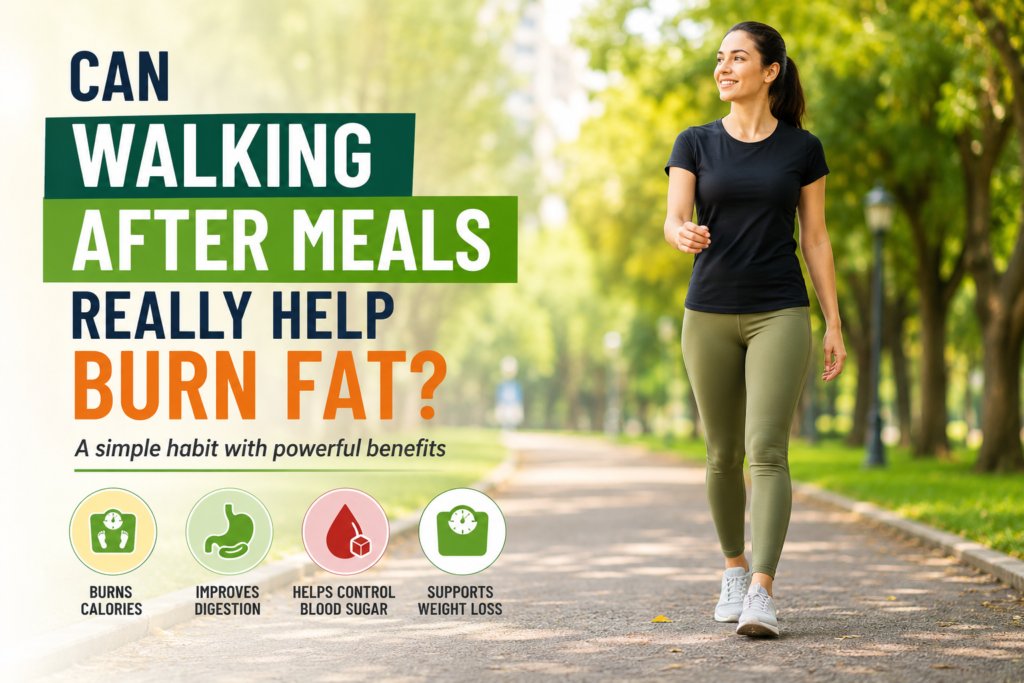
It’s Not Just About Weight Loss
When people hear about walking after meals, they usually think about burning calories.
That’s certainly part of it, but there are other potential benefits too:
- Better digestion
- Increased daily movement
- Improved blood sugar management
- More energy throughout the day
- Less time spent sitting
None of these benefits are dramatic on their own, but together they can support overall health.
Can Walking After Meals Really Help Burn Fat?
This is the question most people want answered.
Technically, yes. Walking burns calories, and burning calories contributes to fat loss over time.
However, it’s important to keep realistic expectations.
A 10- to 20-minute walk after dinner won’t suddenly erase a large meal. Fat loss happens gradually when your body consistently uses more energy than it takes in.
Think of walking after meals as a helpful tool rather than a miracle solution.
For example, if you take two 15-minute walks every day after meals, that’s an extra 30 minutes of activity. Over weeks and months, those extra steps can add up.
That’s where the real benefit comes from—consistency.
What Happens Inside Your Body After Eating?
After a meal, your body begins digesting food and absorbing nutrients. Blood sugar levels naturally rise, especially after meals that contain carbohydrates.
When you go for a walk, your muscles use some of that glucose as fuel. This can help your body process energy more efficiently.
You may not feel anything happening, but your body is working behind the scenes.
Many people also notice that they feel less sleepy after meals when they stay lightly active.
It’s one of those habits that sounds almost too simple until you try it yourself.
How Long Should You Walk?
The good news is that you don’t need to spend an hour walking after every meal.
In fact, shorter walks are often easier to maintain.
A Simple Routine
| Meal | Suggested Walking Time |
|---|---|
| Breakfast | 10 minutes |
| Lunch | 10–15 minutes |
| Dinner | 15–20 minutes |
Even if you can only manage one walk a day, that’s perfectly fine.
The goal isn’t perfection. The goal is building a habit you can stick with.
Other Benefits People Often Notice
Fat loss gets most of the attention, but many people continue post-meal walks for completely different reasons.
Better Digestion
A gentle walk can help some people feel less bloated after eating.
Heavy meals sometimes leave you feeling uncomfortable, especially if you sit down immediately afterward. Light movement may help ease that feeling.
More Daily Movement
Modern life involves a lot of sitting.
We sit while working, driving, watching TV, and scrolling through our phones. A short walk after meals is an easy way to break up long periods of inactivity.
A Chance to Clear Your Mind
Many people end up enjoying the mental benefits as much as the physical ones.
A quiet walk after dinner can be surprisingly relaxing. It gives you a chance to step away from screens, get some fresh air, and slow down for a few minutes.
Common Mistakes to Avoid
Expecting Fast Results
One of the biggest mistakes is assuming you’ll see noticeable weight loss within a few days.
Healthy fat loss takes time. Walking helps, but consistency matters much more than speed.
Walking Too Hard
Some people think faster is always better.
After eating, a comfortable pace is usually the best option. You should be able to walk and hold a conversation without feeling out of breath.
Ignoring Other Habits
Walking after meals works best when paired with healthy eating, good sleep, and regular physical activity.
No single habit can do everything on its own.
A short walk after eating might seem like a small thing, and honestly, it is. But small things repeated every day often have a bigger impact than we expect. Whether your goal is to burn a few extra calories, improve digestion, or simply move more during the day, walking after meals is one of the easiest healthy habits you can start.