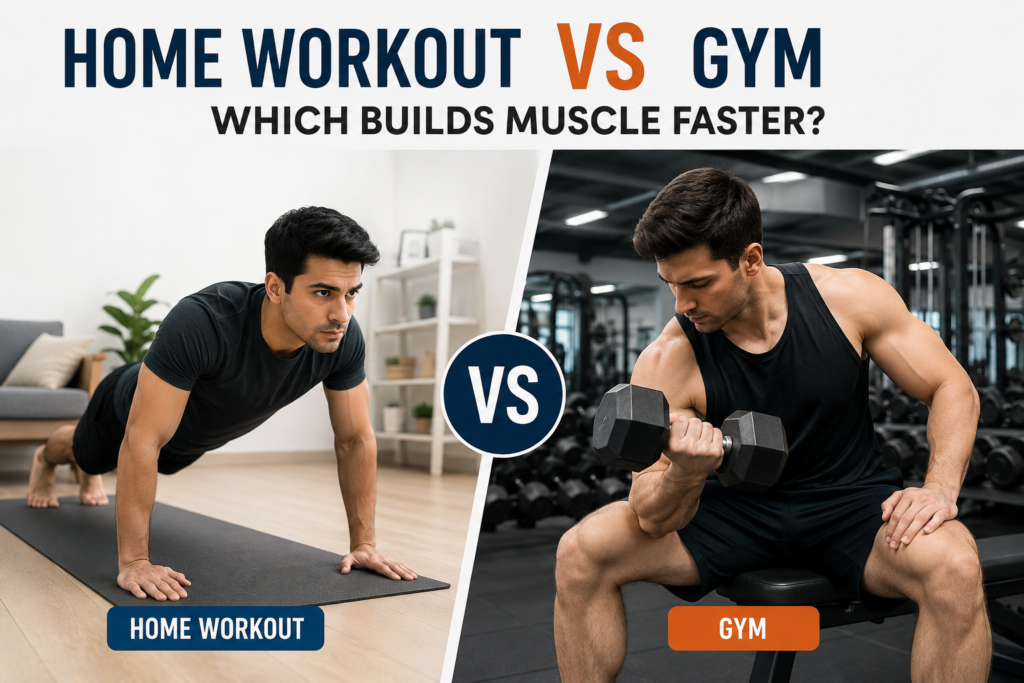
Many people who start their fitness journey ask the same question: Should I work out at home or join a gym if I want to build muscle faster? It’s a fair question because both options have their own advantages. Some people swear by the gym, while others have built an impressive physique without ever buying a membership.
The truth is, there isn’t one answer that fits everyone. Muscle growth depends on more than just where you exercise. Your workout routine, nutrition, recovery, and consistency all play a huge role.
Let’s look at both options and see which one gives you the best chance of gaining muscle.
What Actually Makes Muscles Grow?
Before comparing home workouts and gym workouts, it’s important to understand how muscles grow.
Your muscles become stronger when they are challenged. This challenge creates tiny tears in the muscle fibers. When your body repairs these fibers with enough protein, sleep, and nutrition, they grow back bigger and stronger.
This process is called muscle hypertrophy. Whether you train at home or in a gym, the basic rule stays the same—you need to keep making your muscles work harder over time.
Progressive Overload Is the Secret
You may hear fitness trainers talk about “progressive overload.” It simply means increasing the challenge little by little. You can do this by:
- Lifting heavier weights
- Doing more repetitions
- Adding more sets
- Slowing down the movement
- Reducing rest time
Without progressive overload, muscle growth usually slows down.
Home Workouts: Can You Build Serious Muscle?
The idea that home workouts are only for weight loss isn’t really true anymore. With resistance bands, adjustable dumbbells, kettlebells, or even bodyweight exercises, many people build noticeable muscle at home.
Exercises like push-ups, pull-ups, squats, lunges, dips, and Bulgarian split squats can become surprisingly challenging as you improve.
One thing many people enjoy about home workouts is convenience. You don’t spend time travelling, waiting for equipment, or feeling uncomfortable around others. It’s easier to stay consistent when your workout space is only a few steps away.
Where Home Workouts Can Feel Limited
The biggest challenge comes after a few months.
As your muscles become stronger, you’ll need more resistance. If all you have is your body weight, it can become harder to keep progressing, especially for muscles like your back and legs.
Buying extra equipment can solve this problem, but it also increases the cost.
Gym Workouts: Why They Often Build Muscle Faster
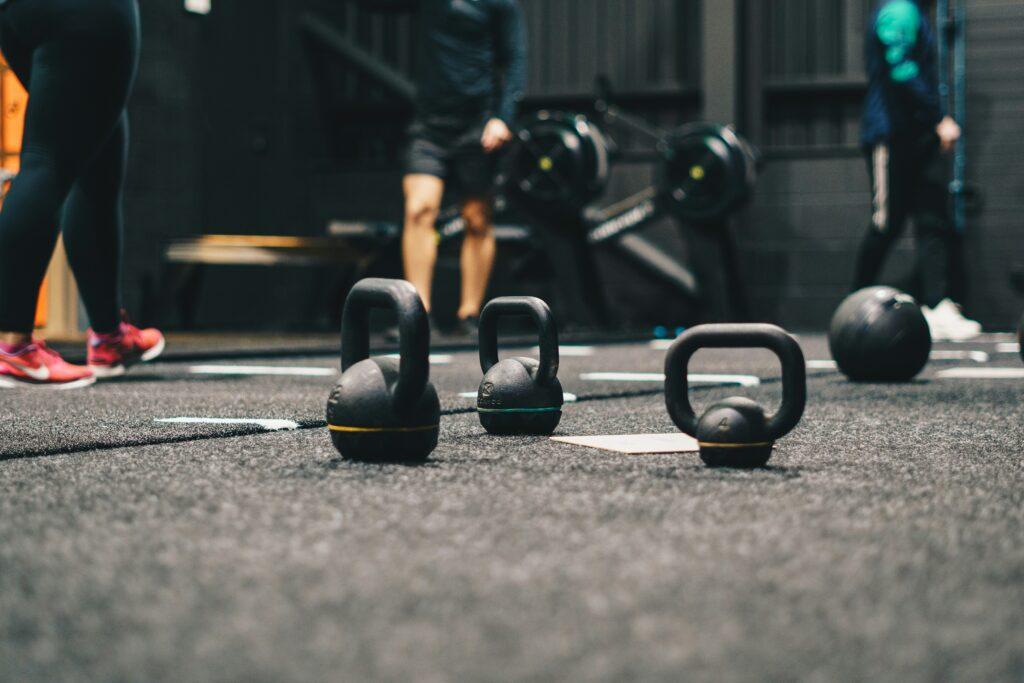
A gym gives you something that’s difficult to match at home—variety and heavier resistance.
You’ll find barbells, dumbbells, cable machines, squat racks, benches, and many other machines that target different muscle groups. This makes progressive overload much easier.
For example, if you bench press 20 kg this week, you can increase it to 22.5 kg or 25 kg over time. These small increases help muscles continue growing.
Another advantage is motivation. For many people, simply walking into a gym creates a mindset for training. Seeing others work hard can push you to complete one more set instead of stopping early.
But the Gym Isn’t Perfect Either
Not everyone enjoys crowded gyms. Some people feel intimidated, especially beginners.
Travelling to the gym also takes time. If your schedule is already packed, missing workouts becomes easier than you’d like. And of course, there’s the monthly membership fee.
So while the gym offers better equipment, it only works if you actually go consistently.
Does Equipment Really Matter?
Yes—and no.
If you’re just starting your fitness journey, your body responds quickly to almost any resistance training. A beginner can gain muscle with bodyweight exercises, resistance bands, or a pair of dumbbells.
As you become more experienced, equipment starts making a bigger difference because heavier loads become necessary for continued muscle growth.
That’s one reason experienced bodybuilders usually prefer gym training. They have access to equipment that makes it easier to challenge every muscle from different angles.
Nutrition Is More Important Than Many People Think
Here’s something people often overlook.
You can train in the best gym in the world, but if your diet isn’t supporting muscle growth, progress will be slow.
Aim to eat enough protein every day from foods like eggs, chicken, fish, paneer, Greek yogurt, milk, lentils, soy products, and beans. Drinking enough water and getting 7–9 hours of sleep each night also helps your muscles recover.
Skipping recovery is like trying to build a house without giving the workers any bricks.
Which One Should You Choose?
Choose Home Workouts If:
- You have a busy schedule.
- You enjoy exercising alone.
- You’re a beginner.
- You have some basic equipment at home.
- Saving money is important.
Choose the Gym If:
- Your goal is maximum muscle growth.
- You want access to heavy weights.
- You enjoy training around other people.
- You like having more exercise options.
- You’re ready to follow a long-term strength program.
So, Which Builds Muscle Faster?
If everything else is equal—good nutrition, proper sleep, and consistent training—the gym usually has a small advantage because it offers more equipment and makes progressive overload easier.
That said, don’t let that discourage you if working out at home fits your lifestyle better. Plenty of people have built strong, muscular bodies from their living room by staying disciplined and gradually increasing the challenge.
At the end of the day, the workout you’ll actually stick to is the one that delivers results. A simple home routine done four times a week is far better than paying for a gym membership and rarely showing up.
Muscle building isn’t about where you train—it’s about how consistently you train, how well you eat, and whether you keep giving your body a reason to grow.