Protein is one of those nutrients that everyone talks about. Some people believe eating more protein is always better, while others worry they are not getting enough. The truth is somewhere in the middle. Your body needs protein every single day, but the right amount depends on your age, weight, activity level, and health goals.
If you’ve ever wondered, “Am I eating enough protein?” you’re definitely not alone. It’s one of the most common nutrition questions, and thankfully, the answer is simpler than it seems.
Why Does Your Body Need Protein?
Protein is often called the building block of the body, and for good reason. Every cell in your body contains protein. It helps repair muscles, supports your immune system, keeps your skin healthy, and even helps make hormones and enzymes.
Think about what happens after a long workout or even a busy day of walking around. Your muscles go through tiny amounts of wear and tear. Protein helps repair that damage so your body stays strong.
It also keeps you feeling full for longer. That’s why a breakfast with eggs or yogurt usually keeps hunger away much better than sugary cereal alone.
So, How Much Protein Do You Actually Need?
For most healthy adults, the general recommendation is:
The Basic Daily Requirement
You need about 0.8 grams of protein for every kilogram (kg) of body weight each day.
Here’s what that looks like:
- 50 kg person → around 40 grams
- 60 kg person → around 48 grams
- 70 kg person → around 56 grams
- 80 kg person → around 64 grams
This amount is enough for someone who has a normal lifestyle and doesn’t exercise much.
However, that’s just the minimum needed to maintain basic body functions.
Protein Needs Change with Your Lifestyle
Not everyone needs the same amount.
If You Exercise Regularly
People who do strength training, running, cycling, or other regular workouts usually need more protein.
Most fitness experts recommend around 1.2 to 2 grams per kilogram of body weight depending on training intensity.
For example:
A person weighing 70 kg who lifts weights several times a week may need around 85–140 grams of protein daily.
This helps muscles recover and grow after exercise.
If You’re Trying to Lose Weight
Protein can be surprisingly helpful during weight loss.
It keeps you full, reduces unnecessary snacking, and helps preserve muscle while you’re losing body fat.
Many diet plans increase protein slightly because people often find it easier to stick to their calorie goals when meals are more satisfying.
Older Adults Need More Too
As we age, muscle naturally becomes weaker.
Many doctors suggest older adults eat a little more protein than the minimum recommendation to help maintain muscle strength and reduce the risk of falls.
Adding protein to each meal instead of eating most of it only at dinner can make a difference.
What Are Good Sources of Protein?
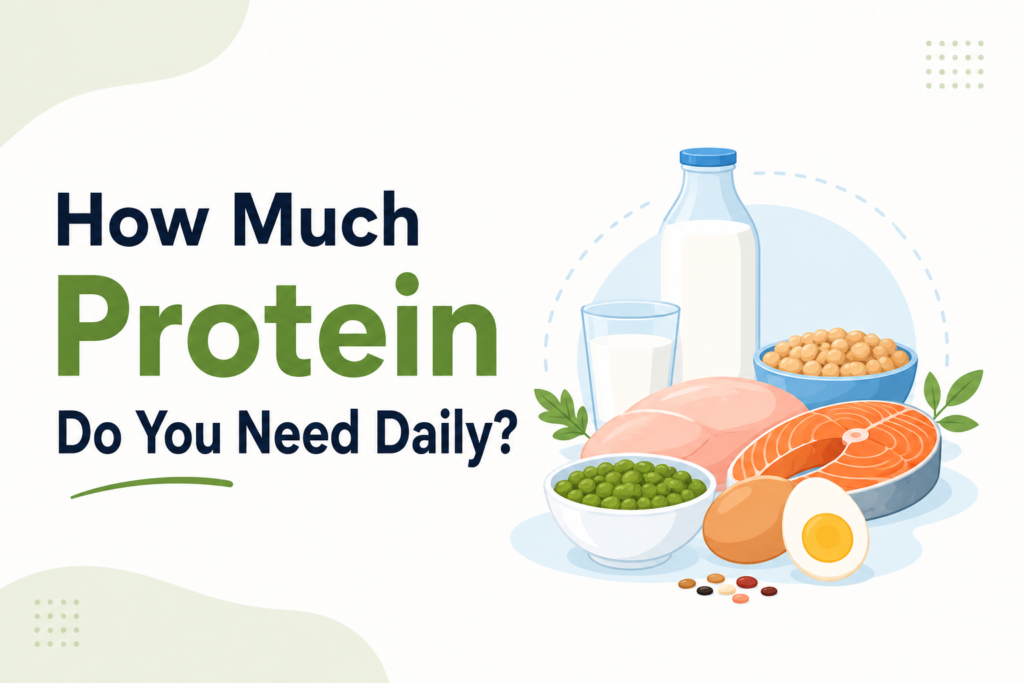
The good news is you don’t need expensive protein powders to meet your daily needs.
Animal Protein Sources
- Eggs
- Chicken
- Fish
- Lean meat
- Milk
- Greek yogurt
- Cottage cheese
These foods contain all the essential amino acids your body needs.
Plant-Based Protein Sources
If you follow a vegetarian or vegan diet, there are plenty of choices too.
Some healthy options include:
- Lentils
- Chickpeas
- Kidney beans
- Soybeans
- Tofu
- Tempeh
- Peanuts
- Almonds
- Pumpkin seeds
- Quinoa
Mixing different plant proteins throughout the day helps provide a complete range of amino acids.
Is It Better to Eat Protein All at Once?
Not really.
Many people eat very little protein during breakfast and lunch, then have a large amount at dinner.
Nutrition experts generally recommend spreading protein across the day instead.
For example:
- Breakfast: Eggs or Greek yogurt
- Lunch: Dal with rice and vegetables or grilled chicken
- Evening snack: Roasted chickpeas or nuts
- Dinner: Fish, tofu, paneer, or beans
This helps your body use protein more efficiently and keeps you feeling satisfied between meals.
Can You Eat Too Much Protein?
For most healthy people, eating a bit more protein isn’t harmful. But extremely high-protein diets are not necessary for everyone.
Eating huge amounts of protein while ignoring fruits, vegetables, whole grains, and healthy fats can lead to an unbalanced diet.
People with kidney disease should also talk to their doctor before increasing protein intake because they may need special dietary advice.
Balance is always better than extremes.
Simple Ways to Add More Protein Every Day
If you’re falling short, small changes work better than big ones.
Easy Ideas
- Add boiled eggs to breakfast.
- Include dal or beans with lunch.
- Choose Greek yogurt instead of sugary desserts.
- Snack on roasted chickpeas or mixed nuts.
- Add paneer or tofu to salads.
- Include fish or lean chicken a few times a week if you eat meat.
- Blend milk, yogurt, and fruit into a smoothie for a quick protein-rich snack.
None of these changes feel dramatic, but together they can easily increase your daily protein intake.
Don’t Chase Numbers Alone
It’s easy to get caught up in protein calculators, fitness apps, and social media posts claiming you need massive amounts of protein. In reality, most people don’t need to obsess over every gram.
If your meals include a good source of protein, plenty of vegetables, whole grains, and healthy fats, you’re already moving in the right direction. Pay attention to how you feel too. Steady energy, good recovery after exercise, and feeling satisfied after meals are often signs that your diet is working well.
Protein is important, but it’s just one part of a healthy eating pattern. Getting the right amount consistently matters far more than trying to eat as much as possible in a single day.