Most of us don’t really think about our breathing until something feels wrong.
When we’re stressed, worried, angry, or overwhelmed, breathing often becomes quick and shallow. It’s one of those things that happens automatically. You may not even notice it at first.
Have you ever been nervous before a presentation or an important phone call? Chances are your breathing changed without you realizing it.
What’s interesting is that breathing doesn’t just respond to stress—it can also influence it. That’s one reason deep breathing has been used for centuries in different cultures and wellness practices. It sounds almost too simple, but taking a few slow, deep breaths can genuinely help you feel calmer.
Stress Changes the Way You Breathe
When the brain senses stress, the body enters what is often called “fight or flight” mode.
Your heart beats faster. Muscles become tense. Breathing speeds up.
This reaction was useful thousands of years ago when humans needed to respond quickly to danger. The problem is that today, our bodies react in a similar way to things like work pressure, traffic jams, deadlines, or financial worries.
The body often can’t tell the difference between a real physical threat and everyday stress.
The Cycle Many People Don’t Notice
Stress causes faster breathing.
Faster breathing can make the body feel even more anxious.
That anxious feeling creates more stress.
And suddenly you’re stuck in a cycle without realizing how it started.
Deep breathing helps interrupt that cycle.
Why Slow Breathing Makes You Feel Calmer
One thing I’ve noticed is that when people are stressed, they often want a complicated solution. Maybe a special supplement, a new productivity system, or a long self-help routine.
Sometimes the body just needs a signal that everything is okay.
Slow, deep breathing sends that signal.
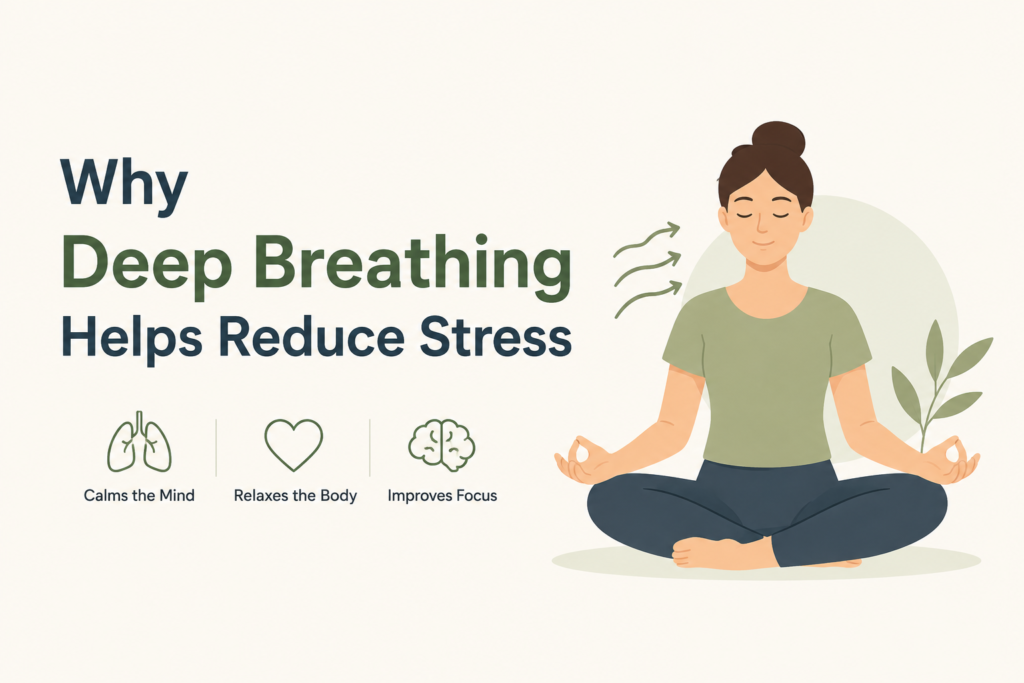
When you take slower breaths, your nervous system begins to shift away from stress mode. Your heart rate may slow down, muscle tension can decrease, and your mind often feels a little less crowded.
The situation causing stress might still be there, but your reaction to it can change.
It’s Like Pressing a Pause Button
Deep breathing doesn’t magically remove problems.
The email still needs an answer. The deadline still exists.
But a few minutes of controlled breathing can create enough space for you to think more clearly instead of reacting emotionally.
Many people describe it as hitting a pause button during a busy day.
The Mental Benefits of Deep Breathing
The effects aren’t only physical.
When you’re stressed, your thoughts often start racing. One worry leads to another, and before long you’re imagining situations that haven’t even happened.
Deep breathing gives your mind something simple to focus on.
Instead of thinking about ten different problems, you’re paying attention to the next inhale and exhale.
That small shift can be surprisingly powerful.
Better Focus and Concentration
People often associate breathing exercises with relaxation, but they can also improve focus.
When the brain isn’t overloaded with stress signals, concentrating becomes easier.
This is one reason athletes, performers, and even public speakers often use breathing techniques before important events.
A Simple Deep Breathing Exercise
The good news is that you don’t need special equipment, training, or a quiet mountain retreat.
You can do this almost anywhere.
Try This for One Minute
- Sit comfortably.
- Breathe in slowly through your nose for four seconds.
- Hold your breath for a moment.
- Breathe out gently through your mouth for six seconds.
- Repeat several times.
That’s it.
Many people notice a difference after just a minute or two.
Situations Where Deep Breathing Can Help
Deep breathing is useful because it fits easily into daily life.
| Situation | How Deep Breathing Can Help |
|---|---|
| Work Stress | Helps reduce tension and improve focus |
| Traffic or Commuting | Encourages patience and calmness |
| Before Sleeping | Helps the body relax |
| Public Speaking | Reduces nervous feelings |
| During Arguments | Creates time before reacting emotionally |
You don’t need to wait until stress becomes overwhelming. Even a few slow breaths during normal parts of the day can help.
Why Consistency Matters More Than Duration
A common mistake is assuming you need a 30-minute breathing session for results.
In reality, short and regular practice often works better.
A minute here. Two minutes there.
Waiting in line. Sitting at your desk. Taking a break between tasks.
These small moments add up.
Making It a Daily Habit
Some people pair deep breathing with existing habits. For example:
- Before checking emails in the morning
- Before meals
- Before going to bed
- After finishing work
Attaching it to something you already do makes it easier to remember.
The best thing about deep breathing is that it’s always available. You don’t have to buy anything, download anything, or schedule a special appointment. In a world that often feels busy and noisy, taking a few slow breaths can be one of the simplest ways to bring a little calm back into the day.