Building muscle isn’t just about lifting heavier weights or spending more time in the gym. What you eat every day matters just as much. In fact, many people work out consistently but don’t see the results they expect because their diet doesn’t provide enough protein.
The good news is that you don’t need expensive imported protein foods to build muscle. Indian kitchens are already full of affordable, nutritious, and protein-rich ingredients. Whether you’re vegetarian or non-vegetarian, there are plenty of options that can help support muscle growth and recovery.
Why Protein Is Important for Muscle Gain
Protein is made up of amino acids, which are the building blocks of muscles. Every time you exercise, especially during strength training, tiny muscle fibers break down. Your body repairs these fibers with protein, making them stronger and bigger over time.
Most active adults aiming for muscle gain need around 1.2 to 2 grams of protein per kilogram of body weight each day. The exact amount depends on your workout routine, age, and fitness goals.
The key isn’t just eating more protein—it’s spreading it across your meals throughout the day.
Best High-Protein Indian Foods You Should Include
Eggs – A Simple Muscle-Building Food
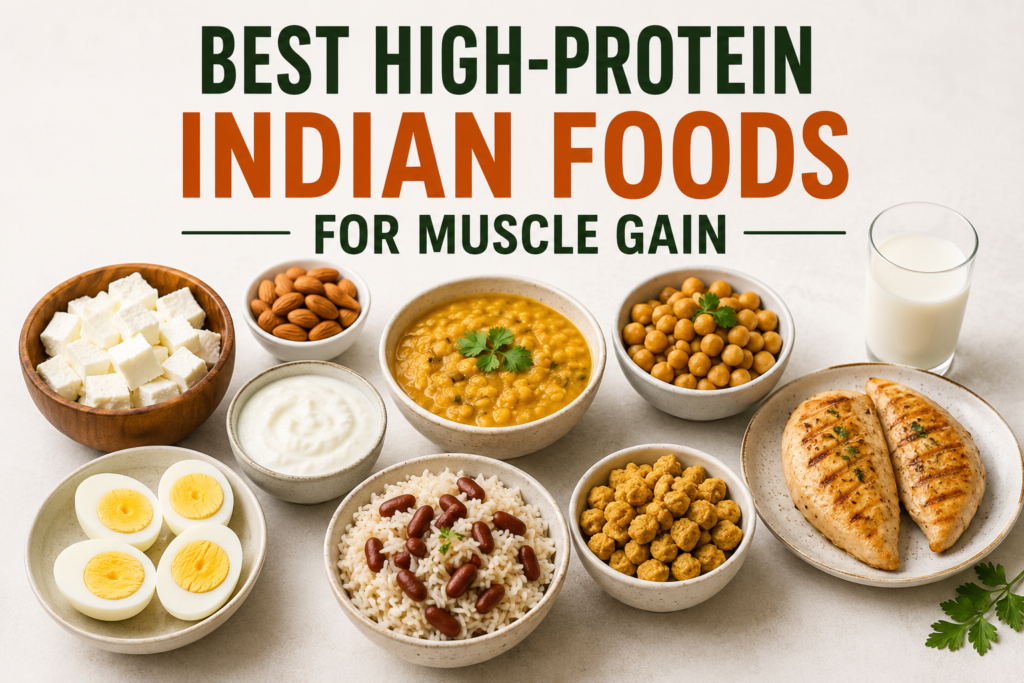
Eggs are one of the easiest ways to increase protein intake. One large egg provides about 6 grams of high-quality protein, along with healthy fats and vitamins.
Boiled eggs, omelets with vegetables, or scrambled eggs make excellent breakfast or post-workout meals. They’re affordable, filling, and easy to prepare.
Paneer – A Favorite for Vegetarians
Paneer is rich in casein protein, which digests slowly and keeps your muscles supplied with amino acids for longer.
About 100 grams of paneer contains 18–20 grams of protein. You can enjoy it in curries, grilled as a snack, or mixed into salads. If possible, choose homemade or low-fat paneer to keep saturated fat under control.
Chicken Breast
If you eat meat, chicken breast is one of the best protein sources available. It offers around 30–31 grams of protein per 100 grams while staying relatively low in fat.
Grilled, baked, or lightly cooked chicken pairs well with rice, roti, or vegetables. It doesn’t have to be fancy—simple home-style cooking works perfectly.
Fish
Fish like rohu, hilsa, salmon, tuna, and mackerel are rich in protein and also provide healthy omega-3 fatty acids, which support heart health and may reduce exercise-related inflammation.
Aim to include fish once or twice a week if it fits your diet.
Protein-Rich Vegetarian Foods That Really Help
Many people believe vegetarians can’t build muscle easily. That’s simply not true.
Lentils and Dal
Moong dal, masoor dal, toor dal, and urad dal all contain good amounts of protein along with fiber.
A bowl of cooked dal provides around 8–10 grams of protein. Pair it with rice or roti to create a more balanced meal.
Chickpeas and Rajma
Chickpeas (chana), kidney beans (rajma), and black chana are excellent plant-based protein sources.
They’re also rich in complex carbohydrates, which provide energy for workouts. Rajma-chawal or chana salad can easily fit into a muscle-building meal plan.
Soy Chunks
Soy chunks often surprise people because they’re incredibly high in protein. In their dry form, they contain over 50 grams of protein per 100 grams.
After soaking and cooking, they become soft and can be added to curries, pulao, or stir-fries. They’re also budget-friendly, making them popular among students and gym-goers.
Greek Yogurt and Curd
Curd is already a staple in many Indian homes, but Greek yogurt contains even more protein.
Besides helping muscle recovery, yogurt supports digestion thanks to its probiotics. A bowl with fruits or roasted seeds makes a refreshing snack, especially during summer.
Don’t Ignore These Smaller Protein Sources
Sometimes people focus only on one or two foods and forget that small protein contributions throughout the day also matter.
Here are a few worth adding:
- Peanuts and peanut butter
- Almonds and pistachios
- Pumpkin seeds
- Milk
- Oats
- Quinoa
- Sprouted moong
- Tofu
These foods may not provide huge amounts individually, but together they help increase your daily protein intake without much effort.
A Few Simple Tips to Get More Protein Every Day
You don’t need to completely change your eating habits. Small adjustments often make the biggest difference.
- Include a protein source in every meal.
- Eat protein within one to two hours after your workout.
- Add paneer, eggs, or sprouts to breakfast.
- Replace fried snacks with roasted chana or Greek yogurt.
- Drink enough water, especially if you’re increasing protein intake.
- Don’t skip carbohydrates—they provide the energy needed for effective workouts.
Remember, Food Alone Isn’t Enough
Muscle gain happens when good nutrition, regular strength training, proper sleep, and consistency work together. Eating protein without exercising won’t magically build muscle, just as exercising without enough protein slows down recovery.
Also, don’t feel pressured to buy expensive supplements right away. For many beginners, a balanced Indian diet already provides most of the nutrients needed to make steady progress.
Some weeks you’ll notice visible changes, while other weeks may feel slow. That’s completely normal. Building muscle is usually a gradual process, and staying consistent with both your workouts and meals is what makes the biggest difference over time.