
Most people know that sleep is important. Yet, many of us treat it like something we can always catch up on later. We stay up late watching videos, scrolling through social media, finishing work, or simply because we are not feeling sleepy.
The funny thing is that we often notice the effects of poor sleep only when they become hard to ignore. Maybe you wake up tired even after spending enough time in bed. Maybe you feel irritated for no clear reason, forget simple things, or struggle to focus during the day.
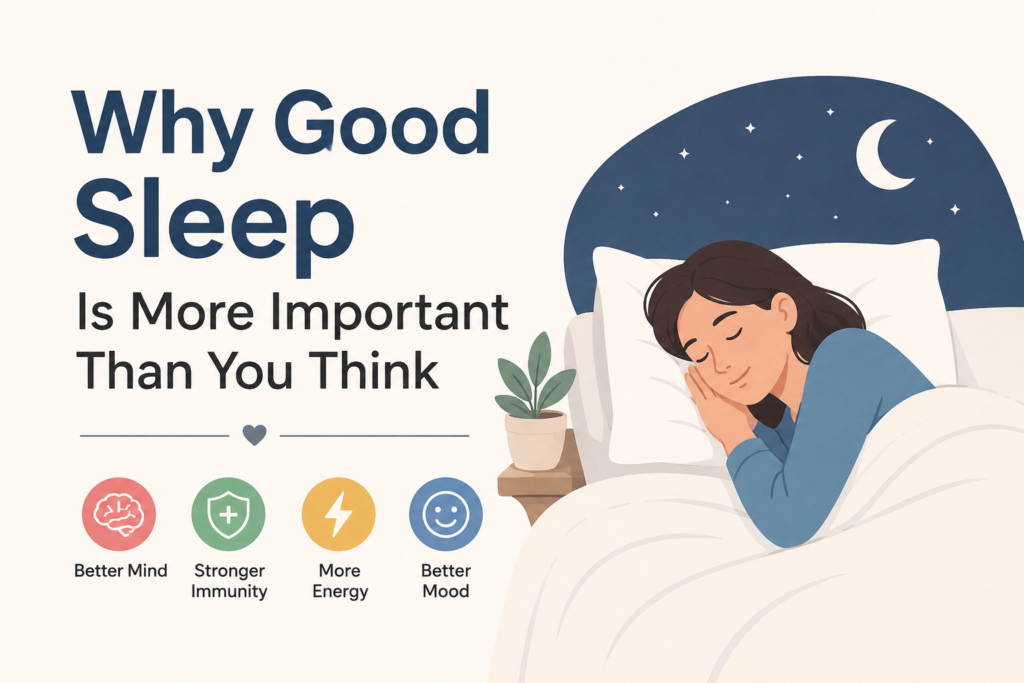
Good sleep is not just about feeling rested. It affects almost every part of your body, from your brain and heart to your immune system and mood. In many ways, sleep is one of the most powerful health tools we have, and it doesn’t cost anything.
Your Body Does Important Repair Work While You Sleep
When you are asleep, your body is far from inactive.
During the night, your body repairs tissues, builds muscle, balances hormones, and recovers from the stress of the day. Think of sleep as a maintenance period. Just as a machine needs downtime for servicing, your body needs sleep to function properly.
If this recovery process is interrupted regularly, small problems can slowly turn into bigger ones. You may not notice the effects immediately, but over time they can impact your overall health.
Sleep Helps Your Brain Reset
Have you ever noticed how difficult it is to think clearly after a poor night’s sleep?
That’s because sleep plays a major role in brain function. While you sleep, your brain processes information, stores memories, and clears waste products that build up throughout the day.
People who sleep well often find it easier to learn new things, make decisions, and stay focused. On the other hand, lack of sleep can lead to forgetfulness, slower thinking, and poor concentration.
The Link Between Sleep and Your Mood
One thing many people overlook is how closely sleep and emotions are connected.
A bad night of sleep can make small problems feel much bigger than they really are. You may become impatient, anxious, or emotionally drained without understanding why.
Many people have experienced this. After sleeping poorly, even a simple conversation can feel frustrating. After a good night’s rest, the same situation often feels much easier to handle.
Good sleep helps your brain regulate emotions, making it easier to manage stress and maintain a positive outlook.
Sleep Supports a Strong Immune System
Nobody enjoys getting sick, but sleep can help reduce the chances.
Your immune system relies on sleep to function properly. During sleep, your body produces important proteins and immune cells that help fight infections.
People who regularly sleep too little often find themselves catching colds more frequently or taking longer to recover from illness.
This is one reason why doctors often recommend extra rest when you’re sick. Your body needs that time to heal.
How Sleep Affects Physical Health
Sleep influences more than just energy levels.
Research has linked long-term sleep deprivation with several health concerns, including:
| Health Area | Possible Impact of Poor Sleep |
|---|---|
| Heart Health | Increased strain on the heart |
| Weight Management | Higher risk of weight gain |
| Blood Sugar Control | Difficulty regulating glucose |
| Mental Health | Increased stress and anxiety |
| Energy Levels | Constant fatigue and low motivation |
These effects don’t usually appear overnight. They build gradually, which is why many people underestimate the importance of consistent sleep.
Not All Sleep Is Equal
You may spend eight hours in bed and still wake up feeling exhausted.
Quality matters just as much as quantity.
Interrupted sleep, frequent waking, excessive screen time before bed, and an uncomfortable sleep environment can all reduce sleep quality.
Signs You May Not Be Getting Quality Sleep
- Feeling tired shortly after waking up
- Needing large amounts of caffeine every day
- Difficulty focusing
- Frequent mood swings
- Feeling sleepy during the afternoon
- Waking up several times during the night
If these sound familiar, improving sleep quality may be more important than simply spending more hours in bed.
Simple Habits That Can Improve Sleep
The good news is that small changes often make a noticeable difference.
Create a Consistent Sleep Schedule
Try going to bed and waking up at roughly the same time each day, even on weekends. Your body likes routine more than most people realize.
Reduce Screen Time Before Bed
Phones, tablets, and televisions can make it harder for your brain to prepare for sleep. Putting screens away 30 to 60 minutes before bedtime can help.
Keep Your Bedroom Comfortable
A cool, quiet, and dark room often leads to better sleep.
Avoid Heavy Meals Late at Night
Eating large meals just before bed can make it harder to fall asleep comfortably.
Get Some Daylight
Natural sunlight during the day helps regulate your body’s internal clock and supports better sleep at night.
Good sleep is often treated as a luxury, but it is really a basic need. When you consistently get enough quality sleep, you may notice better energy, improved focus, a stronger mood, and even better overall health. Sometimes the simplest health habit is also the one we overlook the most.