
Let’s be honest. Most of us spend more time looking at screens than we realize.
You check your phone after waking up. Then come emails, social media, messages, videos, news updates, and maybe a few random internet searches that somehow turn into a 30-minute scrolling session.
Before you know it, several hours of your day have disappeared.
Technology has made life easier in many ways. We can work, learn, shop, and connect with people instantly. But there is another side to it that doesn’t get talked about enough. Constant digital exposure can quietly affect our mental health, energy levels, and even how we feel about ourselves.
That’s why more people are paying attention to the idea of a digital detox.
What Is a Digital Detox?
A digital detox simply means taking a break from digital devices for a certain period of time.
This doesn’t always mean throwing your phone into a drawer and disappearing for a week. For most people, it’s about creating healthier boundaries with technology.
A digital detox might include:
- Turning off non-essential notifications
- Staying away from social media for a day
- Limiting screen time before bed
- Spending weekends with less phone use
- Taking regular breaks from work screens
The goal isn’t to avoid technology completely. It’s to stop technology from controlling every spare moment of your day.
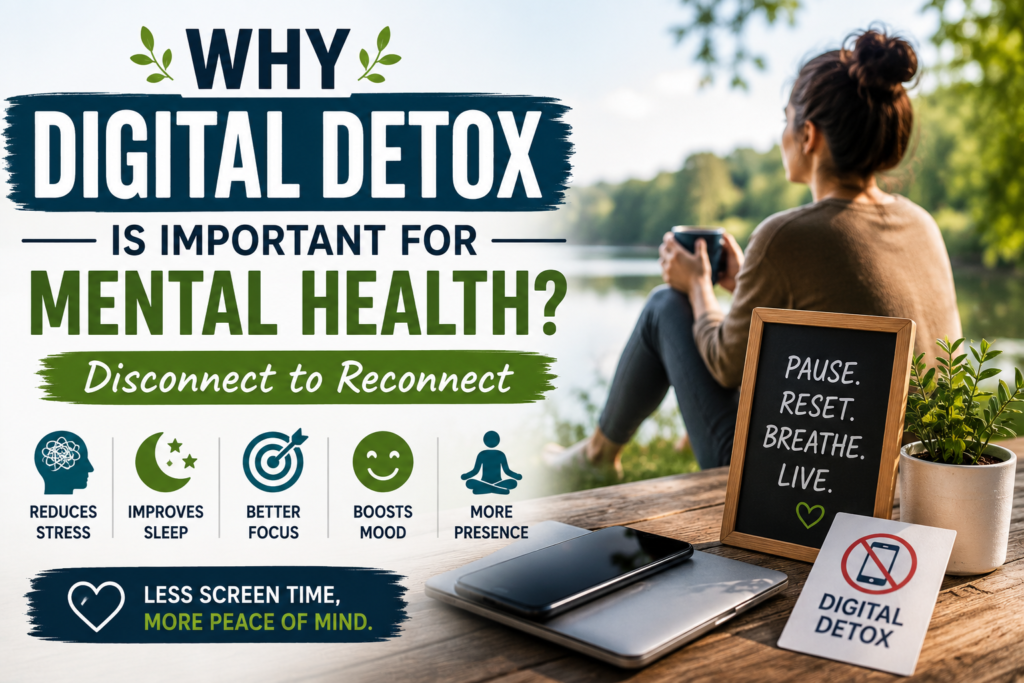
The Mental Load of Constant Connectivity
One thing many people notice during a digital detox is how mentally exhausting constant notifications can be.
Every vibration, message alert, or social media update demands a little bit of attention. Individually they seem harmless, but together they can create a feeling of mental clutter.
Have you ever picked up your phone to check one thing and then forgotten what you were originally looking for?
It happens because our attention keeps getting pulled in different directions.
Why Our Brains Need Quiet Moments
Years ago, waiting in line meant simply standing there.
Now, almost everyone reaches for a phone within seconds.
While there’s nothing wrong with occasional scrolling, our brains also need moments of stillness. Quiet moments allow us to think, process emotions, and mentally recharge.
When every empty moment is filled with digital content, that mental breathing space becomes harder to find.
Social Media Can Affect Mood More Than We Think
Social media can be entertaining and useful. It helps people stay connected and discover new ideas.
But it can also encourage constant comparison.
You might see someone’s vacation photos, fitness transformation, new car, promotion, or seemingly perfect lifestyle. Even when we know those posts don’t show the whole picture, comparisons can happen automatically.
Many people have experienced this feeling:
“I was in a good mood, then I spent twenty minutes scrolling and somehow felt worse.”
That’s one reason short breaks from social media often leave people feeling surprisingly refreshed.
Better Sleep Is One of the Biggest Benefits
Screens and Sleep Don’t Always Get Along
If you’ve ever stayed up later than planned because of your phone, you’re definitely not alone.
Many people intend to spend five minutes checking messages before bed. Suddenly it’s midnight.
Late-night screen use can make it harder to unwind. Constant stimulation keeps the brain engaged when it should be preparing for rest.
People who reduce screen time before bedtime often report:
| Habit Change | Possible Benefit |
|---|---|
| Less phone use before bed | Easier relaxation |
| Fewer notifications at night | Better sleep quality |
| Reduced late-night scrolling | More consistent sleep schedule |
| Screen-free bedroom time | Improved morning energy |
Good sleep supports almost every aspect of mental health, from mood to concentration.
A Digital Detox Can Improve Focus
Attention has become one of the most valuable resources today.
Many of us try to work while checking messages, emails, news updates, and social media all at the same time.
The result?
Tasks often take longer, and mental fatigue builds up faster.
When people reduce distractions, they often notice something interesting. Activities become more enjoyable.
Reading feels easier. Conversations become more engaging. Even simple hobbies seem more satisfying when a phone isn’t constantly competing for attention.
Being Present Feels Different
One thing people often mention after reducing screen time is that they feel more present.
A walk feels like a walk instead of an opportunity to check notifications.
Dinner becomes a conversation instead of a scrolling session.
You start noticing small things again—something that can easily get lost when your attention is always divided.
Digital Detox Doesn’t Have to Be Extreme
The good news is that you don’t need a dramatic lifestyle change.
Small adjustments can make a noticeable difference.
Some simple ideas include:
- Keeping your phone away during meals
- Creating a no-screen hour before bed
- Turning off unnecessary notifications
- Taking short social media breaks
- Spending time outdoors without your phone
- Setting daily screen time limits
These habits may seem minor, but they can help create a healthier relationship with technology over time.
Finding Balance in a Digital World
Technology isn’t the enemy. Most of us rely on it every day, and there’s nothing wrong with that.
The challenge is finding balance.
When screens begin taking over our attention, sleep, relationships, or peace of mind, it may be a sign that a reset is needed. Even a few hours away from constant notifications can remind us how refreshing it feels to focus on the world right in front of us.
A digital detox isn’t really about using technology less. It’s about making sure technology serves your life instead of quietly running it.