Most of us spend more time sitting than we realize. We sit while working, eating, driving, watching TV, scrolling through social media, and sometimes even while relaxing after a long day. It feels normal because almost everyone does it.
The problem is that our bodies were never designed to stay in a chair for hours at a time.
Many people focus on exercise and healthy eating but overlook one simple habit that can quietly affect their health—sitting too long. Even if you go to the gym a few times a week, spending most of the day sitting can still create problems over time.
Let’s look at how sitting too long affects your body and why small movement breaks can make a bigger difference than many people think.
Your Muscles Become Weak and Tight
When you sit for long periods, several muscles stop working as much as they should.
Your leg muscles, glutes, and core muscles become less active. Over time, this can lead to weakness, stiffness, and reduced flexibility. Many people notice that their hips feel tight or that standing up after sitting for a long time feels uncomfortable.
You may have experienced that feeling after a long car ride or a full day at a desk. Your body feels stiff, and stretching suddenly feels necessary.
The longer this habit continues, the more your muscles adapt to inactivity.
Poor Posture Starts Developing
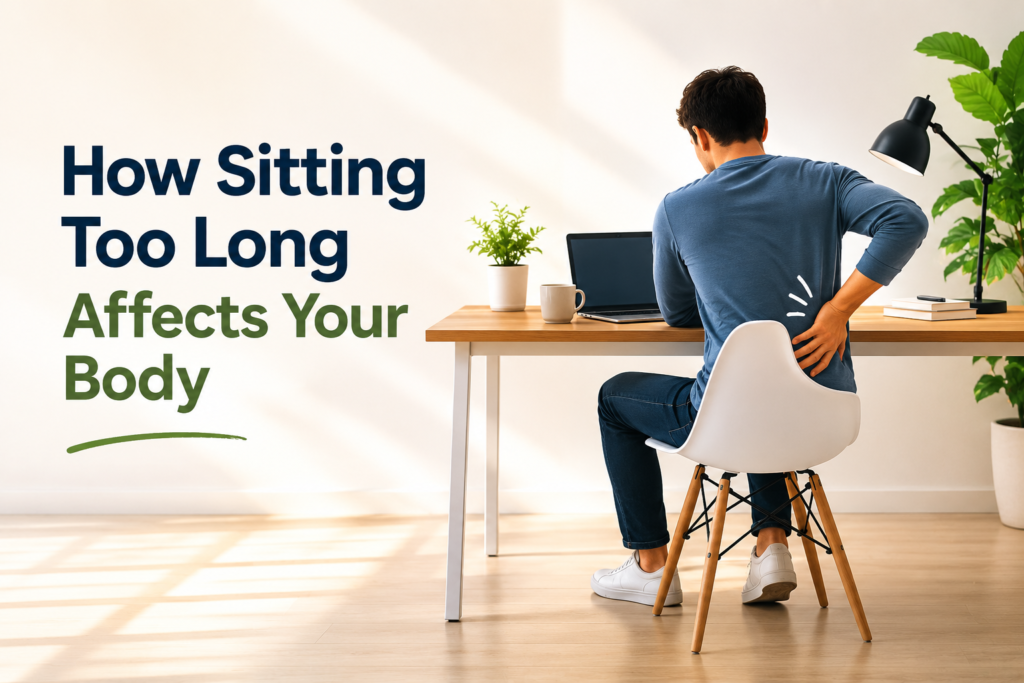
One of the most common effects of prolonged sitting is poor posture.
Many people naturally lean forward while looking at a computer screen or phone. Shoulders round forward, the neck bends down, and the lower back loses its natural position.
Common Posture Problems Linked to Sitting
| Problem | Possible Effect |
|---|---|
| Forward head posture | Neck pain and headaches |
| Rounded shoulders | Upper back discomfort |
| Slouched lower back | Back pain and stiffness |
| Tight hip flexors | Reduced mobility |
The effects may seem minor at first, but they often become more noticeable as months and years pass.
Your Back May Start Hurting More Often
Back pain is one of the biggest complaints among people who sit for long hours.
Sitting places pressure on the spine, especially when posture isn’t ideal. If your chair, desk, or screen position is not comfortable, the strain can increase even more.
Interestingly, some people don’t notice the damage immediately. They simply wake up feeling stiff or develop recurring lower back pain that seems to appear out of nowhere.
In many cases, too much sitting plays a role.
Sitting Too Long Can Slow Your Metabolism
Your body burns fewer calories when you’re sitting compared to standing or moving around.
A slower metabolism can make it easier to gain weight over time, especially when combined with low physical activity and high-calorie foods.
This doesn’t mean sitting automatically causes weight gain. But when movement decreases and calorie intake stays the same, the body stores more excess energy.
That’s one reason health experts often encourage people to get up and move regularly throughout the day.
Your Heart Health Can Be Affected
People are often surprised to learn that sitting too much can impact the heart.
Long periods of inactivity may contribute to poor circulation and can be associated with higher risks of heart-related problems over time. When muscles are inactive for extended periods, blood flow slows down compared to when you’re moving around.
Even simple activities like walking for a few minutes can help improve circulation.
Why Movement Matters for Circulation
When you move:
- Blood flows more efficiently.
- Muscles help pump blood back toward the heart.
- Energy levels often improve.
- The body burns more calories.
These small benefits add up throughout the day.
Your Legs and Feet May Feel Swollen
Have you ever noticed swollen feet after a long flight or a day of sitting at work?
This happens because fluid can accumulate in the lower parts of the body when movement is limited.
Some people also experience numbness, tingling, or a heavy feeling in their legs after remaining seated for long periods.
Walking around for a few minutes usually helps restore normal circulation and reduce discomfort.
It Can Affect Your Mental Well-Being
The effects of sitting are not always physical.
Many people report feeling sluggish, tired, or mentally drained after sitting all day. While work stress often gets the blame, lack of movement may contribute as well.
A short walk, a few stretches, or simply stepping outside for fresh air can sometimes improve mood and concentration surprisingly quickly.
It’s one of those things people don’t appreciate until they start doing it regularly.
Small Changes Can Make a Big Difference
The good news is that you don’t need to quit your desk job or spend hours exercising every day.
Simple habits can help reduce the negative effects of prolonged sitting:
Easy Ways to Sit Less During the Day
- Stand up every 30–60 minutes.
- Take short walking breaks.
- Stretch your neck, shoulders, and hips.
- Walk while talking on the phone.
- Use stairs when possible.
- Park a little farther away from entrances.
- Consider a standing desk for part of the day.
These small actions may seem insignificant, but they add movement back into your routine.
Listen to What Your Body Is Telling You
Many people ignore early warning signs like stiffness, back pain, tight hips, or constant fatigue. The body often gives subtle signals before bigger problems develop.
If you spend most of your day sitting, you don’t need to become obsessed with counting every minute. Just make movement a regular part of your day.
A few stretches here, a short walk there, standing while taking a call—it all counts. Your body responds surprisingly well when you give it opportunities to move.
The truth is simple: sitting itself isn’t the enemy. Sitting for hours without moving is where the real problem begins. By breaking up long periods of sitting, you can support your muscles, posture, circulation, and overall health without making drastic changes to your lifestyle.