There is something comforting about the monsoon season. The smell of wet soil, cooler weather, and a hot cup of tea by the window can instantly improve the mood. But while the rainy season feels refreshing, it also brings a few health challenges.
Many people notice that digestion becomes slower during the monsoon. Seasonal infections, stomach problems, food contamination, and low immunity also become more common. This is why the food you choose during these months matters a little more than usual.
You don’t need a complicated diet plan. A few smart food choices can help your body stay healthy and energetic throughout the season.
Why Your Diet Matters More During Monsoon
The rainy season creates conditions where bacteria, viruses, and fungi can grow more easily. Street food, contaminated water, and improperly stored food can sometimes lead to stomach infections.
At the same time, many people experience bloating, acidity, or digestive discomfort during this season.
This doesn’t mean you need to stop enjoying food. It simply means paying a bit more attention to what goes on your plate.
Foods That Work Well During the Rainy Season
Some foods naturally support digestion and immunity, making them good choices during the monsoon.
Warm Homemade Meals Are Usually the Safest Option
Freshly cooked food is often the best choice during rainy days.
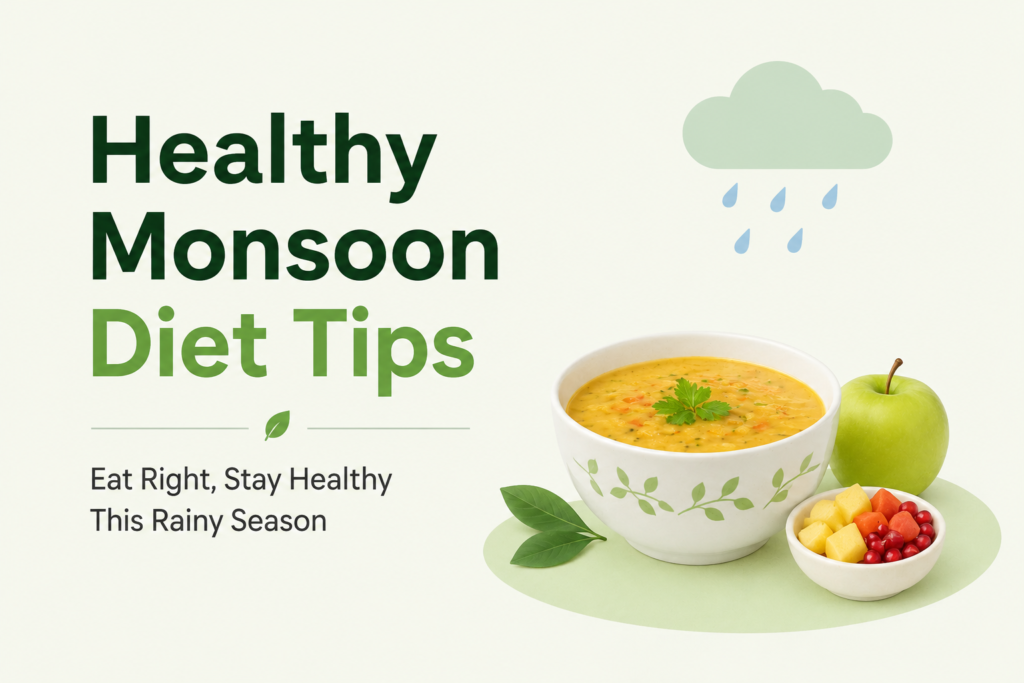
Simple meals like rice, dal, vegetable soups, khichdi, and lightly cooked vegetables are easy on the stomach and less likely to cause digestive issues.
Many people find that heavy restaurant meals feel harder to digest during this season. A warm homemade meal often feels much better.
Seasonal Fruits Can Be Helpful
Fruits provide vitamins and antioxidants that support immunity.
Some good options include:
- Apples
- Pears
- Pomegranates
- Papaya
- Bananas
Wash fruits thoroughly before eating them. During the monsoon, cleanliness matters as much as nutrition.
Include Immunity-Friendly Spices
Indian kitchens already have some wonderful ingredients that become especially useful during the rainy season.
Ginger, turmeric, black pepper, cinnamon, and cloves are commonly used in traditional home remedies.
A cup of ginger tea on a rainy evening doesn’t just feel comforting—it may also support digestion and help keep seasonal discomfort away.
A Quick Guide to Monsoon-Friendly Foods
| Food Group | Good Choices |
|---|---|
| Grains | Rice, oats, millets, whole wheat |
| Vegetables | Bottle gourd, pumpkin, ridge gourd, carrots |
| Fruits | Apple, banana, pear, papaya |
| Beverages | Warm water, herbal tea, soups |
| Protein Sources | Dal, lentils, eggs, paneer, lean chicken |
The goal isn’t perfection. It’s simply choosing foods that are fresh, clean, and easy to digest.
Foods That Are Better Limited During Monsoon
Not every food behaves the same way during the rainy season.
Be Careful With Street Food
This may not be what people want to hear, especially when the weather practically invites us to eat pakoras from roadside stalls.
The issue isn’t the food itself. It’s hygiene.
Rainwater, humidity, and improper storage can increase the risk of contamination. If you’re craving snacks, homemade versions are usually the safer option.
Excessively Oily Foods Can Feel Heavy
Deep-fried foods are tempting during rainy weather, but eating them too often may lead to indigestion or bloating.
Enjoy them occasionally, but try not to make them an everyday habit throughout the season.
Raw Leafy Vegetables Need Extra Care
Leafy greens are healthy, but during the monsoon, they may carry more dirt and microorganisms.
Many people prefer eating them cooked rather than raw during this season. Proper washing and cooking can help reduce risks.
Don’t Forget About Hydration
One common mistake people make during the monsoon is drinking less water.
Since the weather feels cooler, thirst naturally decreases. But your body still needs enough fluids.
Easy Ways to Stay Hydrated
- Keep a water bottle nearby.
- Drink warm water if cold water feels uncomfortable.
- Include soups and herbal drinks.
- Limit sugary beverages.
Hydration supports digestion, energy levels, and overall health.
Small Habits That Make a Big Difference
Diet is important, but a few daily habits can make your monsoon routine even healthier.
Pay Attention to Food Freshness
Try not to keep cooked food sitting out for long periods. Humidity can spoil food faster than many people realise.
Wash Produce Properly
Vegetables and fruits should be cleaned carefully before cooking or eating.
Choose Fresh Over Processed
Packaged snacks are convenient, but fresh foods generally provide better nutrition and are easier for the body to handle.
One thing many families notice is that simple foods often work best during the monsoon. Warm meals, seasonal fruits, plenty of fluids, and a little caution with hygiene can go a long way. You don’t need expensive superfoods or complicated meal plans—just sensible choices that help your body stay comfortable and healthy while you enjoy the rainy season.