
For many Bengalis, mangoes are more than just a fruit. They’re part of summer itself.
The arrival of mango season changes the mood of a household. Conversations suddenly revolve around Himsagar, Langra, or Fazli. Plates fill with sliced mangoes after lunch, and nobody seems to complain when juice drips down their fingers.
So it may come as a surprise that far away from Bengal, on islands in the Mediterranean, mangoes have found another interesting companion: prawns.
At first, the combination sounds unusual. Sweet fruit and seafood don’t always seem like natural partners. Yet in parts of Sicily and nearby islands, chefs and home cooks have experimented with tropical fruits in seafood dishes, creating combinations that feel surprisingly familiar to Bengali tastes.
A Pairing That Sounds Strange Until You Taste It
The first reaction many people have is simple.
“Mango with prawns? Really?”
But think about it for a moment.
Bengali cuisine has never been afraid of balancing sweet and savory flavors. A touch of sweetness often appears where outsiders least expect it. From tomato chutney to sweet notes in certain fish preparations, the idea isn’t completely foreign.
That’s probably why the mango-prawn combination feels less shocking to Bengali food lovers than it might to others.
The sweetness of ripe mango can soften the natural saltiness of seafood. Add a little citrus, some herbs, and a hint of spice, and suddenly everything starts making sense.
The Sicilian Love for Fresh Ingredients
One thing Sicily and Bengal have in common is respect for fresh produce.
Both food cultures rely heavily on ingredients that are available locally and seasonally.
Where Tropical Fruits Meet Mediterranean Cooking
Over the years, mangoes have become increasingly available in Mediterranean regions. Chefs began experimenting with them much like they do with peaches, oranges, or figs.
In coastal areas, seafood is everywhere. Fresh prawns often arrive at markets in the morning and make their way onto dinner tables by evening.
Combining the two was almost inevitable.
The result isn’t a heavy curry or a rich seafood stew. Instead, it’s often a lighter preparation where the natural flavors do most of the work.
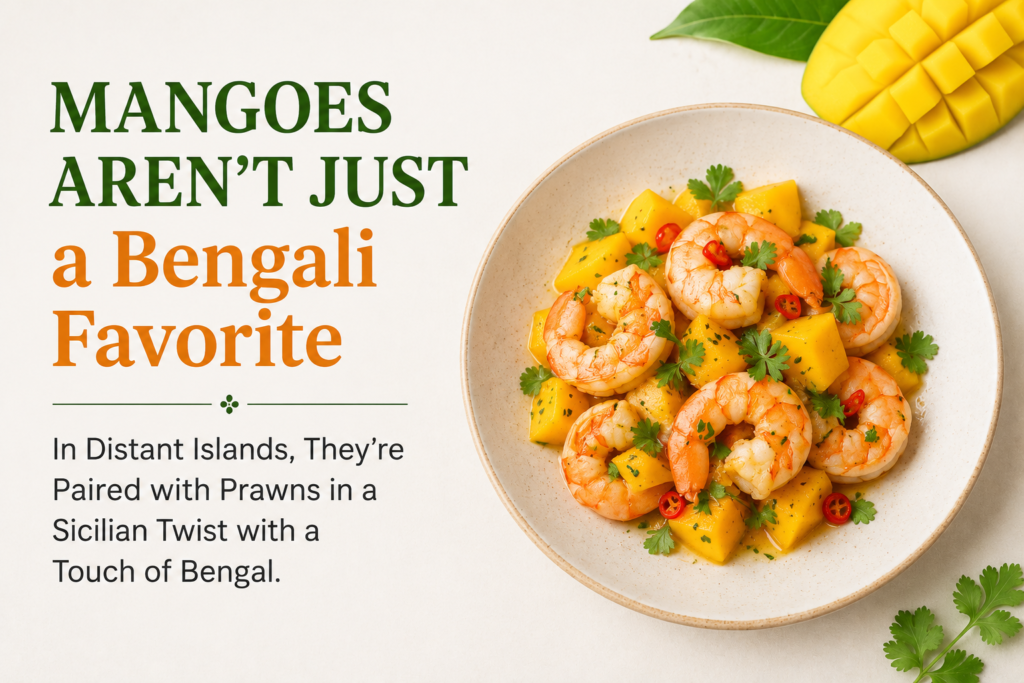
What Makes Mango and Prawns Work So Well?
The secret is contrast.
Prawns bring a delicate sweetness of their own, along with a slightly briny flavor from the sea. Mangoes contribute freshness, fruitiness, and a soft texture.
Neither ingredient overwhelms the other.
A Balance of Flavors
Here’s what each ingredient brings to the plate:
| Ingredient | Contribution |
|---|---|
| Mango | Sweetness and freshness |
| Prawns | Light seafood flavor |
| Lemon or Lime | Bright acidity |
| Olive Oil | Smooth richness |
| Herbs | Fresh aroma |
| Chili | Gentle heat |
When combined carefully, the dish feels vibrant rather than complicated.
That’s often the beauty of Mediterranean cooking. The ingredient list is usually shorter than people expect.
A Hint of Bengal Appears Naturally
Even though the dish has Sicilian roots, there are moments when it feels surprisingly Bengali.
Take green chilies, for example.
Some modern versions include a little heat to balance the sweetness of the mango. That combination instantly reminds many Bengalis of their favorite sweet-spicy flavor pairings.
Mustard is another interesting connection.
While Sicilian recipes may use olive oil and herbs, a Bengali cook looking at the same ingredients might immediately imagine adding a touch of mustard flavor.
The cultures developed separately, yet sometimes they arrive at similar ideas through completely different paths.
Not Every Mango Needs to Become Dessert
That’s probably one reason this dish stands out.
Most people automatically place mangoes in the dessert category. Ice cream, smoothies, cakes, puddings—those are the usual destinations.
But mangoes can be surprisingly versatile.
In many tropical countries, they’re added to salads, savory sauces, rice dishes, and even grilled preparations.
Once you stop thinking of mangoes as “just a sweet fruit,” a whole new set of possibilities opens up.
The Best Mangoes for Savory Dishes
Interestingly, slightly firm mangoes often work better than extremely ripe ones.
Very soft mangoes can overpower the dish with sweetness.
A firmer mango offers:
- Better texture
- Balanced sweetness
- Easier slicing
- More freshness
Many home cooks discover this by accident after using an overly ripe mango once and finding the dish a bit too sweet.
A Dish That Feels Like Summer
There are certain foods that instantly create a seasonal mood.
Mangoes and prawns together have that effect.
The bright colors alone are enough to catch attention. Golden mango slices beside pink prawns look like something designed for a sunny afternoon by the sea.
And maybe that’s why this combination keeps appearing in different parts of the world.
Whether it’s a Sicilian island kitchen overlooking the Mediterranean or a Bengali dining table during mango season, people are often drawn to the same things: fresh ingredients, simple flavors, and food that feels connected to the season around them.
Sometimes the distance between two food cultures turns out to be much smaller than expected. A ripe mango and a handful of fresh prawns are enough to prove it.