Have you ever noticed more hair on your pillow, comb, or bathroom floor during a stressful time in your life?
Many people do. A tough work schedule, exam pressure, family problems, lack of sleep, or even recovering from an illness can sometimes be followed by increased hair shedding. It often leaves people wondering whether stress and hair fall are connected.
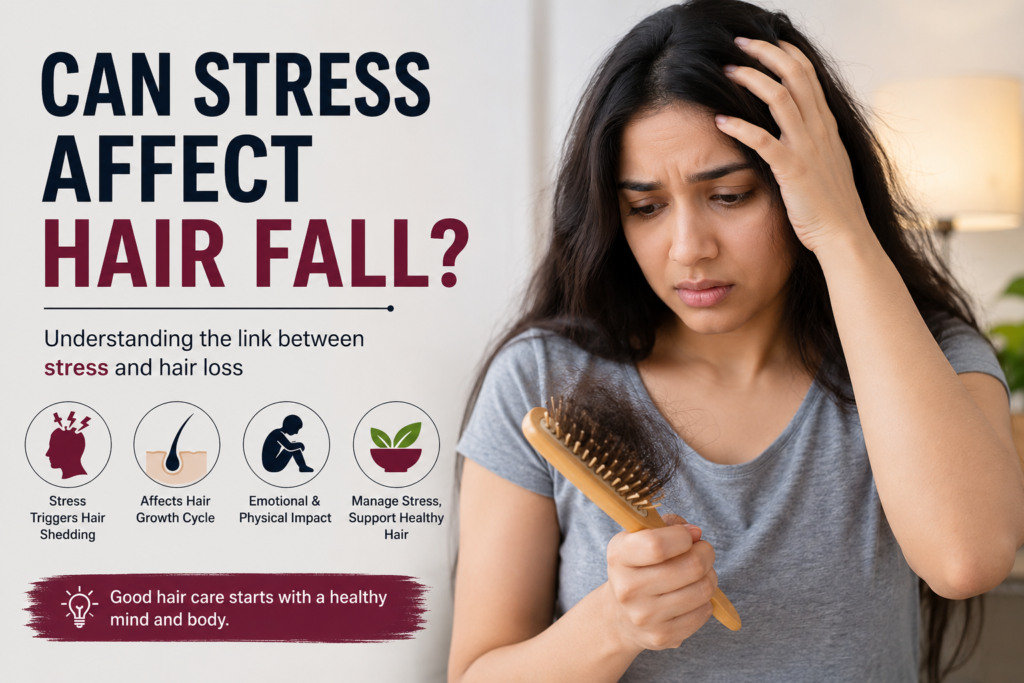
The short answer is yes—stress can affect your hair. While it may not be the only reason behind hair loss, it can play a significant role in how your hair grows, sheds, and recovers.
The Link Between Stress and Hair Health
Hair grows in a natural cycle. Some hairs are actively growing, while others are resting before they eventually fall out. Under normal conditions, this cycle stays balanced.
When the body experiences high levels of stress, that balance can be disturbed. Stress can push more hair follicles into the resting phase. A few weeks or even months later, those hairs may begin to shed more than usual.
This is why people often don’t connect stress with hair loss right away. The stressful event may have happened long before the extra shedding becomes noticeable.
Why Does It Happen?
Stress affects many systems in the body. Hormones, sleep quality, appetite, and overall health can all change during difficult periods.
For example:
- Poor sleep may affect the body’s recovery process.
- Stress can lead to unhealthy eating habits.
- Some people skip meals or consume fewer nutrients.
- Anxiety may increase inflammation in the body.
All these factors can indirectly influence hair health.
A Common Type of Stress-Related Hair Loss
One of the most common forms of stress-related hair shedding is called telogen effluvium.
Don’t worry about the complicated name. It simply means that more hair follicles than usual enter the resting stage at the same time.
A person may notice:
| Common Signs | What You May Notice |
|---|---|
| Increased shedding | More hair in the shower or on the brush |
| Thinner ponytail | Hair feels less full than before |
| Hair on pillows | More strands after waking up |
| Overall thinning | Hair appears less dense across the scalp |
Unlike some other forms of hair loss, this type usually causes overall thinning rather than bald patches.
Not Every Hair Fall Problem Is Caused by Stress
This is important to remember.
Hair fall can happen for many reasons, including:
- Genetics
- Hormonal changes
- Nutritional deficiencies
- Certain medications
- Scalp conditions
- Recent illness or surgery
- Age-related changes
Sometimes stress is the main trigger. Other times it simply adds to an existing issue.
That’s why it’s helpful to look at the bigger picture rather than assuming stress is the only cause.
Small Everyday Habits That May Make Things Worse
Interestingly, stress-related hair fall isn’t always caused directly by stress itself.
Many of the habits that come with stress can affect hair health too.
Skipping Meals
When people feel overwhelmed, eating balanced meals is often the first thing to suffer.
Hair needs nutrients such as protein, iron, vitamins, and minerals. A poor diet over time may contribute to weaker hair growth.
Lack of Sleep
Almost everyone has experienced a period of tossing and turning because of worries.
A few bad nights may not be a big problem, but ongoing sleep issues can affect the body’s ability to repair and maintain healthy functions.
Excessive Hair Styling
Some people react to hair fall by constantly checking, brushing, or trying new products.
Ironically, frequent heat styling, harsh treatments, and tight hairstyles may place additional stress on already fragile hair.
How Long Does Stress-Related Hair Fall Last?
This is probably one of the most common questions people ask.
The answer varies from person to person.
In many cases, once the stressful period passes and the body returns to a more balanced state, hair shedding gradually improves. Since hair grows slowly, noticeable recovery can take several months.
Patience is important. Hair usually doesn’t fall out overnight, and it rarely returns overnight either.
Signs Things May Be Improving
You may notice:
- Less hair on your brush
- Reduced shedding during washing
- New short hairs appearing near the hairline
- Hair feeling fuller over time
These changes often happen gradually rather than all at once.
Simple Ways to Support Healthy Hair During Stress
Managing stress perfectly isn’t realistic. Life gets busy, and everyone goes through challenging periods.
Still, a few practical habits can help support both your overall well-being and your hair.
Focus on Good Nutrition
Try to include:
- Protein-rich foods
- Fruits and vegetables
- Whole grains
- Healthy fats
- Plenty of water
A balanced diet supports healthy hair growth from the inside.
Prioritize Sleep
Even adding an extra hour of quality sleep can make a difference in how your body handles stress.
Stay Active
Regular walking, stretching, yoga, or any form of exercise can help reduce stress levels and support overall health.
Be Gentle With Your Hair
Avoid excessive heat styling, harsh chemical treatments, and hairstyles that pull tightly on the scalp.
When Should You Speak With a Doctor?
If hair loss is severe, continues for several months, or is accompanied by symptoms such as itching, redness, sudden bald patches, or major changes in health, it’s a good idea to seek professional advice.
Sometimes what appears to be stress-related hair loss may actually have another underlying cause that needs attention.
Hair and stress often have a closer relationship than people realize. Many individuals notice increased shedding during difficult periods of life, and while it can be concerning, understanding the connection can make the situation feel a little less mysterious. Taking care of your body, managing stress where possible, and giving your hair time to recover can often make a meaningful difference.