When the rainy season arrives, many families continue using their air conditioner exactly the same way they did during the hot summer months. It feels normal. After all, the AC is already there, and the room still feels a bit uncomfortable.
But here’s something many people don’t realize: one small AC setting can make a surprising difference during monsoon weather.
The mistake? Keeping the AC in regular cooling mode all the time instead of adjusting it to handle excess humidity.
It may seem like a small thing, but it can affect your electricity bill, indoor comfort, and even your children’s health.
Why the Rainy Season Feels Different
During summer, the biggest problem is heat. During the rainy season, however, humidity becomes the real issue.
You may have noticed it yourself. The temperature outside isn’t extremely high, but the air feels sticky. Clothes take longer to dry. Bedsheets feel damp. Sometimes the room feels uncomfortable even when the AC is running.
That’s because moisture levels in the air rise significantly during monsoon months.
Many people try to solve this by lowering the AC temperature to 18°C or 20°C. Unfortunately, that often creates a new problem.
The AC works harder, consumes more electricity, and may leave children sitting in air that is too cold.
The Setting Many People Forget to Change
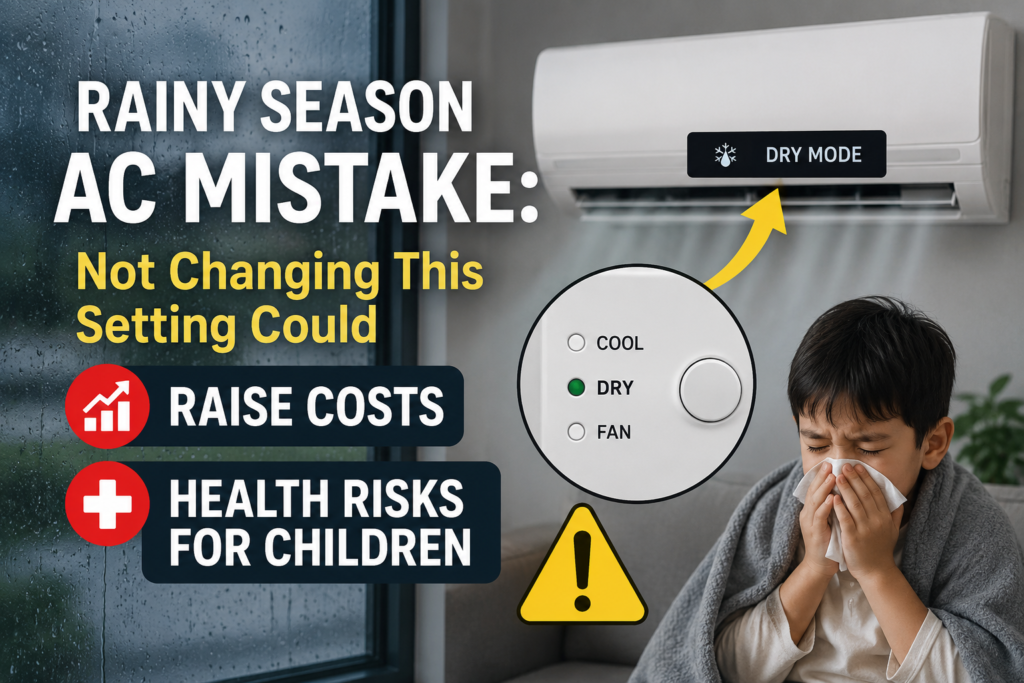
Use Dry Mode Instead of Cooling Mode When Humidity Is High
Most modern air conditioners come with a “Dry Mode” option. Yet many homeowners rarely use it.
Dry Mode is designed specifically to remove excess moisture from indoor air.
Instead of aggressively cooling the room, it focuses on reducing humidity while maintaining comfortable temperatures.
During rainy days, this can make a room feel fresher without turning it into a refrigerator.
Many parents are surprised by how much better the room feels after switching to Dry Mode for a few hours.
The air becomes less sticky, bedding feels drier, and the overall environment becomes more comfortable.
How This Mistake Can Affect Electricity Bills
A common reaction to humid weather is lowering the thermostat.
You might set the AC to 18°C thinking the room will feel better faster.
In reality, the AC keeps working harder to reach and maintain that temperature. Since humidity remains high, the room may still feel uncomfortable.
This leads to longer operating hours and increased power consumption.
Dry Mode often uses less energy because the unit focuses on removing moisture rather than continuously cooling the air.
For families already dealing with higher household expenses, that small adjustment can make a noticeable difference over an entire rainy season.
Why Children May Be More Sensitive
Children often spend more time indoors during rainy weather.
School holidays, indoor play, and wet outdoor conditions mean they may be exposed to indoor air for longer periods.
When humidity remains too high indoors, several issues can develop.
Excess Moisture Can Encourage Mold Growth
Mold thrives in damp environments.
It can appear behind furniture, near windows, inside wardrobes, and sometimes even within poorly maintained AC systems.
Children are often more sensitive to mold exposure than adults.
Some may experience sneezing, coughing, stuffy noses, or irritation of the eyes and throat.
Damp Air Can Feel Uncomfortable
Even when temperatures seem reasonable, high humidity can make children feel sweaty and restless.
Parents sometimes notice that kids sleep poorly during humid nights.
The room isn’t necessarily hot—it just doesn’t feel fresh.
Reducing humidity often improves comfort more effectively than simply lowering the temperature.
A Quick Comparison
| Situation | Regular Cool Mode | Dry Mode |
|---|---|---|
| Focus | Lowers temperature | Removes humidity |
| Energy Use | Often higher during humid days | Usually lower |
| Room Comfort | May still feel sticky | Feels fresher and drier |
| Suitable for Rainy Season | Sometimes | Often yes |
| Helps Control Moisture | Limited | Better |
Other Small AC Habits That Matter
Clean the Filters Regularly
During monsoon months, dust and moisture can combine inside AC filters.
Dirty filters reduce airflow and force the system to work harder.
A quick cleaning every few weeks can improve efficiency and air quality.
Avoid Extremely Low Temperatures
Many experts suggest keeping the AC around 24°C to 26°C for comfort and efficiency.
This range is usually comfortable for most families without making the room excessively cold.
Keep the Room Ventilated When Possible
On days when the weather is pleasant and humidity levels are lower, opening windows for a short time can help refresh indoor air.
Fresh air circulation can reduce that closed, damp feeling many homes experience during the rainy season.
The Real Issue Isn’t Heat—It’s Moisture
One thing I’ve noticed in many homes is that people blame the AC when the room feels uncomfortable during monsoon weather. They assume the machine isn’t cooling properly.
Often, the AC isn’t the problem at all.
The real issue is excess moisture in the air.
Once humidity is reduced, the room can feel significantly more comfortable even without lowering the temperature dramatically.
That simple change in settings is easy to overlook, but it can help create a healthier and more comfortable indoor environment for everyone—especially children who spend long hours inside during rainy days.