
Pregnancy is one of the most beautiful experiences in life, but let’s be honest—it isn’t always easy. One day you may feel full of energy, and the next day even getting out of bed can feel like a challenge. Along with the excitement of welcoming a baby, many women also deal with stress, body aches, mood swings, and sleepless nights.
This is where prenatal yoga can make a real difference. It isn’t about twisting your body into difficult poses or becoming super flexible. Instead, it’s a gentle way to help your mind relax while giving your body the support it needs during pregnancy.
Many mothers say that after just a few weeks of regular practice, they feel calmer, sleep better, and move more comfortably throughout the day. That’s why prenatal yoga has become a popular choice for expecting mothers around the world.
What Is Prenatal Yoga?
Prenatal yoga is a type of yoga designed especially for pregnant women. The movements are slower, safer, and adjusted to suit the changing body throughout pregnancy.
Unlike regular yoga classes, prenatal yoga focuses on breathing, gentle stretching, balance, and relaxation. Every movement is meant to support both the mother and the growing baby.
One thing many people don’t realize is that prenatal yoga isn’t about doing more. It’s actually about slowing down, listening to your body, and moving with care.
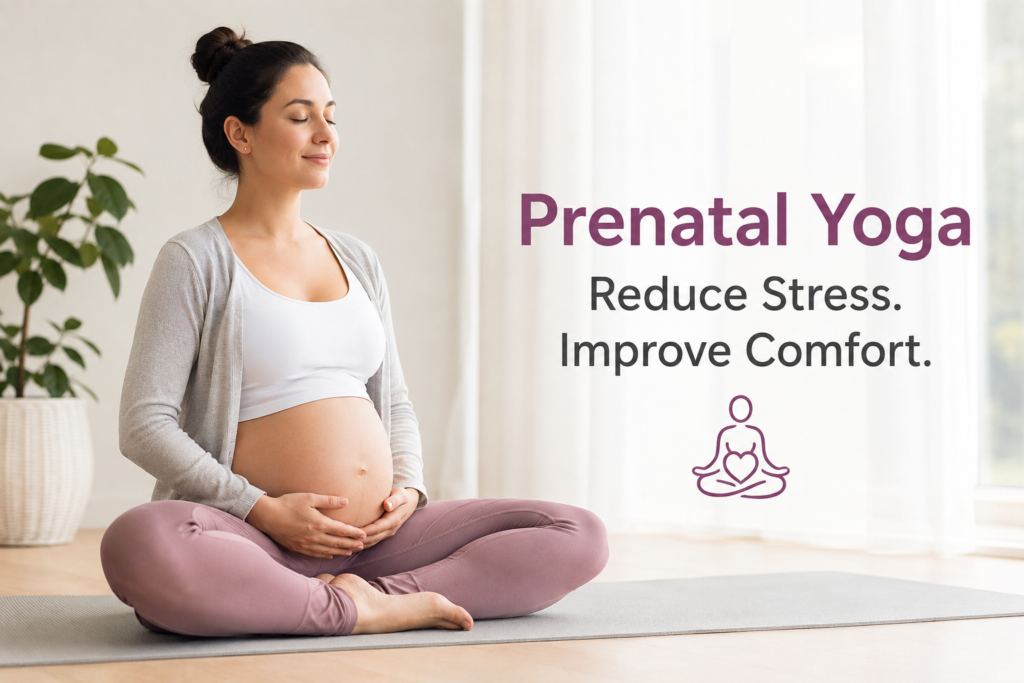
How Prenatal Yoga Helps Lower Stress
Pregnancy brings many emotional changes. Hormones shift, sleep may become difficult, and worries about childbirth or becoming a parent can sometimes feel overwhelming.
Deep Breathing Calms the Mind
One of the biggest parts of prenatal yoga is controlled breathing.
Slow, deep breaths help reduce tension and encourage the body to relax. Even spending five or ten minutes focusing on your breathing can make you feel more peaceful after a busy or stressful day.
Many women even use these breathing techniques later during labor because they help manage discomfort and stay focused.
A Quiet Break From Daily Life
Life doesn’t stop just because you’re pregnant.
Work, family responsibilities, appointments, and daily chores can become exhausting. Prenatal yoga creates a small space where you can simply pause.
For about half an hour, your only job is to breathe, stretch, and take care of yourself. Sometimes that’s exactly what the body and mind need.
Gentle Movement Helps Reduce Common Pregnancy Discomforts
As your baby grows, your body works much harder than usual. This often leads to new aches and pains.
Prenatal yoga helps loosen tight muscles without putting too much pressure on your joints.
Back Pain and Hip Tightness
Many pregnant women experience lower back pain, especially during the second and third trimesters.
Gentle stretches can improve flexibility in the hips, lower back, and legs. This often makes walking, sitting, and even sleeping a little more comfortable.
Better Posture
As the belly grows, the body’s center of balance changes.
Prenatal yoga teaches better posture by gently strengthening the back, shoulders, and core muscles. Good posture can reduce pressure on the spine and help prevent unnecessary discomfort.
Better Sleep Is Another Pleasant Surprise
It’s common to struggle with sleep during pregnancy.
Some women can’t find a comfortable sleeping position. Others wake up often during the night because of discomfort or racing thoughts.
Regular prenatal yoga helps relax both the muscles and the nervous system. After a gentle session, many women notice they fall asleep more easily and wake feeling more refreshed.
Of course, every pregnancy is different, but better relaxation often leads to better rest.
Building Confidence Before Childbirth
Learning to Trust Your Body
Pregnancy can sometimes make women feel like their body is changing faster than they can understand.
Prenatal yoga helps build confidence by encouraging mindful movement instead of fear.
Rather than worrying about every little change, many mothers begin to appreciate how strong and capable their bodies really are.
Preparing for Labor
Several prenatal yoga exercises focus on breathing, gentle hip opening, and relaxation techniques.
These skills can become useful during labor because staying calm often helps women work through contractions more comfortably.
While yoga cannot remove labor pain, it may help improve confidence and reduce anxiety before delivery.
Simple Benefits You May Notice
Every woman experiences pregnancy differently, but many notice improvements like these after practicing prenatal yoga regularly.
| Benefit | How It Helps |
|---|---|
| Less stress | Relaxing breathing calms the mind |
| Better flexibility | Gentle stretches reduce stiffness |
| Improved posture | Supports the growing belly |
| Better sleep | Helps the body unwind before bedtime |
| Reduced back pain | Eases pressure on muscles and joints |
| Better breathing | Useful during pregnancy and labor |
Staying Safe During Prenatal Yoga
Although prenatal yoga is gentle, safety always comes first.
Keep These Tips in Mind
- Always ask your healthcare provider before starting any exercise during pregnancy.
- Join a prenatal yoga class if possible, especially if you’re new to yoga.
- Avoid deep twists or poses that press on your stomach.
- Drink enough water before and after your session.
- Never force a stretch or continue if something feels painful.
- Listen to your body more than the instructor.
Some days you’ll feel energetic. Other days you’ll simply want to rest. Both are completely normal.
Making Prenatal Yoga Part of Your Routine
You don’t need an hour every day.
Even 20 to 30 minutes, three or four times a week, can be helpful.
Some mothers enjoy practicing in the morning to start the day calmly, while others prefer evening sessions to release tension before bed.
There’s no perfect schedule. The best routine is the one you can comfortably stick with.
You may even notice that after finishing a session, you feel a little lighter—not because your body has changed overnight, but because your mind finally had a chance to slow down. During pregnancy, those quiet moments can be just as valuable as physical exercise.