Working from home has its perks. There’s no daily commute, you can wear comfortable clothes, and your kitchen is only a few steps away. Sounds great, right? But after a few months, many people notice something else happening. They move less, sit more, snack more often, and somehow feel tired even though they haven’t left the house.
If that sounds familiar, you’re not the only one. It happens to a lot of people, including those who were quite active before they started working remotely.
The good news is that staying fit while working from home doesn’t mean you need a home gym or an hour-long workout every day. Small habits, repeated regularly, often make the biggest difference.
Why Working from Home Can Affect Your Fitness
When you’re in an office, you naturally move around more than you think. Walking to meetings, climbing stairs, grabbing coffee, or chatting with coworkers all add small amounts of activity to your day.
At home, it’s easy to sit in the same chair from morning until evening. Before you know it, you’ve barely taken a few hundred steps.
That’s why being intentional about movement becomes important.
Create a Morning Routine That Gets You Moving
H3: Don’t Start Your Day in the Chair
It can be tempting to wake up and open your laptop five minutes later. We’ve all done it at least once.
Instead, spend 10 to 15 minutes waking up your body first.
You could:
- Stretch your neck and shoulders
- Do a few bodyweight squats
- Walk around your house
- Practice light yoga
- Dance to your favourite song
It doesn’t have to be perfect. The goal is simply to tell your body that the day has started.
H2: Take Movement Breaks Throughout the Day
One of the biggest mistakes remote workers make is sitting for hours without standing up.
H3: Follow the 30-30 Rule
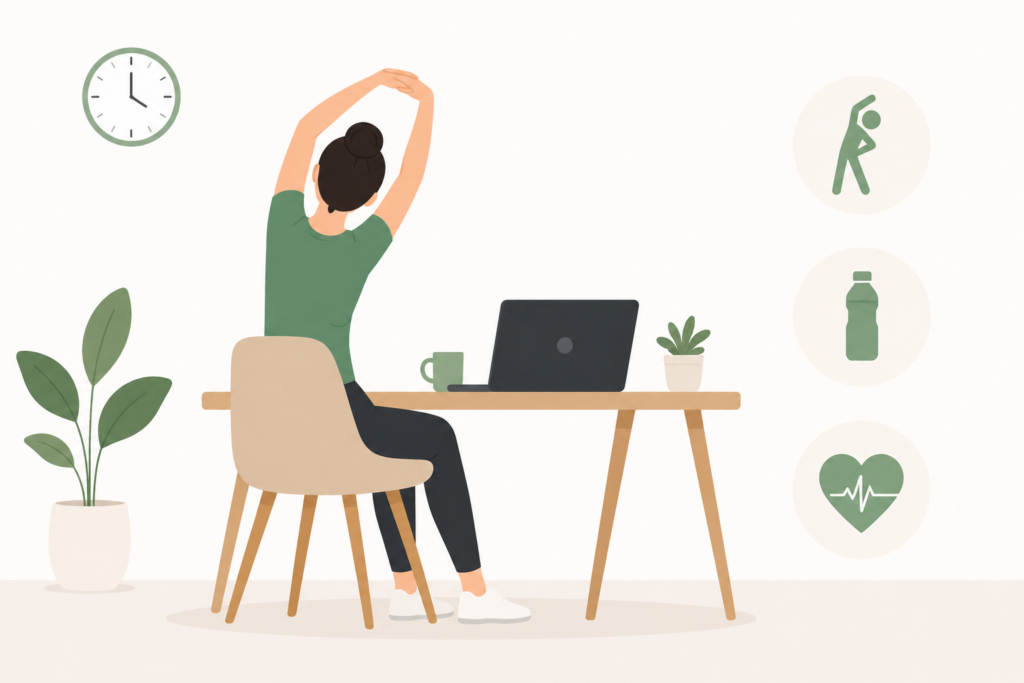
Every 30 minutes, stand up for about 30 seconds.
Walk to the kitchen, stretch your arms, roll your shoulders, or simply look out of the window for a minute. These tiny breaks help reduce stiffness and improve circulation.
You’ll probably return to work feeling more focused too.
Build a Simple Home Workout Routine
You don’t need expensive equipment to stay active.
A 20-minute workout can be enough if you’re consistent.
Try combining exercises like:
- Squats
- Push-ups (or wall push-ups)
- Lunges
- Planks
- Glute bridges
- Jumping jacks
Even doing these three or four times a week can improve strength and energy.
If you enjoy following workout videos, that’s perfectly fine too. Pick one that matches your fitness level instead of trying the hardest one on the first day.
H2: Don’t Forget About Walking
Walking is often overlooked because it feels too simple.
But honestly, it’s one of the easiest ways to stay active.
H3: Find Creative Ways to Add Steps
Take phone calls while walking.
Walk around the room during meetings where you don’t need to be on camera.
Go for a 20-minute walk after lunch or in the evening.
Many people notice they feel mentally refreshed after just a short walk outdoors.
Eat Regular Meals Instead of Constant Snacking
Working close to the kitchen can be both a blessing and a challenge.
Sometimes boredom looks a lot like hunger.
Try planning your meals before the workday begins. Having healthy options ready makes it much easier to avoid reaching for biscuits or chips every hour.
Good snack ideas include:
- Fresh fruit
- Greek yogurt
- Roasted chickpeas
- Mixed nuts
- Boiled eggs
- Homemade smoothies
You don’t have to stop enjoying treats completely. Just try not to let random snacking become part of your work routine.
H2: Stay Hydrated During Working Hours
H3: Keep Water Within Reach
It’s surprising how often people forget to drink water while concentrating.
Keep a water bottle on your desk and sip throughout the day instead of waiting until you’re thirsty.
Sometimes what feels like tiredness is simply mild dehydration.
Tea and coffee are fine in moderation, but water should still be your main drink.
Set Up an Ergonomic Workspace
Fitness isn’t only about exercise.
The way you sit matters too.
Adjust your chair so your feet rest comfortably on the floor.
Keep your computer screen at eye level to avoid neck strain.
Your shoulders should stay relaxed instead of being lifted toward your ears.
A comfortable setup can prevent many of the aches that people associate with working from home.
H2: Make Fitness Feel Like Part of Your Day
H3: Don’t Aim for Perfection
Some days you’ll have plenty of time to exercise.
Other days you’ll barely manage a short walk.
That’s completely normal.
Missing one workout isn’t what affects your health. Giving up altogether does.
Think of movement as something that naturally fits into your routine rather than another task on your to-do list.
Even five minutes of stretching is better than doing nothing.
The best fitness plan is usually the one you can actually stick with. Working from home doesn’t have to mean becoming less active. A few walks, regular stretch breaks, simple home workouts, healthy meals, and enough water can keep your body feeling strong without turning your schedule upside down. Over time, these small habits add up, and you’ll likely notice not just better fitness, but better focus and energy during your workday as well.