
When people hear the words “high blood sugar,” they usually blame one thing—sugar.
It makes sense. Candy, cakes, soft drinks, and desserts are often the first foods that come to mind. But doctors say this is only part of the story. Many everyday foods that don’t even taste sweet can raise your blood sugar just as quickly, and sometimes even faster.
That’s why some people are surprised when their blood sugar readings go up after eating what they thought was a “healthy” meal.
The truth is, your body doesn’t react only to sugar. It also responds to carbohydrates, especially those that are digested quickly. Once broken down, many of these carbs turn into glucose, which enters your bloodstream and raises blood sugar levels.
Let’s look at some common foods that may be affecting your blood sugar without you realizing it.
Why Blood Sugar Rises Even Without Eating Sugar
Here’s something many people don’t know.
Your body treats carbohydrates as its main source of energy. During digestion, most carbs are broken down into glucose, whether they come from a chocolate bar or a bowl of white rice.
The speed of this process depends on the type of carbohydrate. Foods made with refined flour or processed grains are digested much faster than foods rich in fiber.
Doctors often talk about something called the glycemic index, which measures how quickly foods raise blood sugar. Foods with a high glycemic index can cause a sharp spike, while lower-GI foods release glucose more slowly.
That’s why it’s not just about avoiding sweets—it’s about understanding your whole plate.
Everyday Foods That Can Raise Blood Sugar
White Bread
White bread looks harmless, especially if it isn’t sweet.
But because it’s made from refined flour, the fiber has already been removed. That means your body digests it very quickly, leading to a faster rise in blood sugar.
Whole grain bread is usually a better choice because the extra fiber slows digestion and helps keep blood sugar steadier.
White Rice
Rice is a daily staple in many homes, especially across Asia. There’s nothing wrong with enjoying rice, but portion size matters.
A large serving of white rice can raise blood sugar more quickly than many people expect.
Doctors often suggest pairing rice with vegetables, lentils, beans, or lean protein. This combination slows digestion and helps reduce sudden spikes.
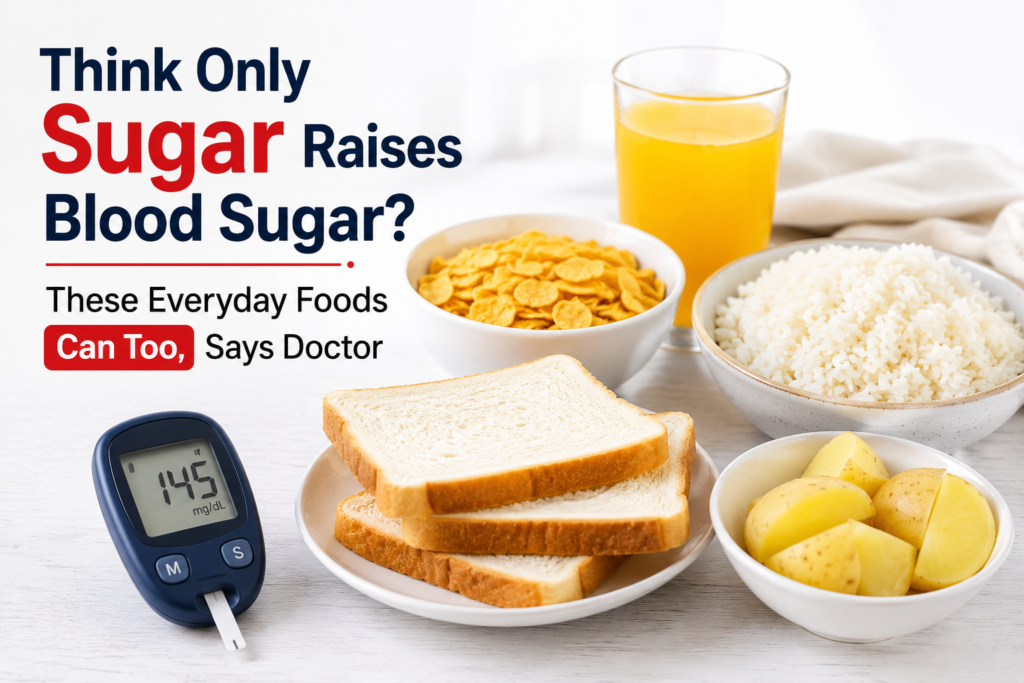
Breakfast Cereals
Many breakfast cereals are marketed as healthy, but not all of them deserve that reputation.
Some cereals contain refined grains and added sugar, even if the front of the box highlights vitamins or whole grains.
If you’ve ever felt hungry again just an hour after breakfast, your cereal could be part of the reason.
Checking the nutrition label can make a big difference.
Fruit Juice
People often think fruit juice is healthier than soft drinks because it comes from fruit.
The problem is that most fruit juices contain very little fiber. Without fiber, the natural fruit sugars are absorbed much faster.
Eating a whole orange is usually better than drinking a glass of orange juice because chewing the fruit and getting all its fiber slows the release of sugar into the bloodstream.
Potatoes
Potatoes themselves aren’t unhealthy, but how they’re prepared matters.
Mashed potatoes, French fries, and baked potatoes can all raise blood sugar fairly quickly because the starch is easily digested.
Adding vegetables and protein to the meal helps balance things out.
Foods That May Surprise You
Flavored Yogurt
Plain yogurt can be a nutritious choice.
Flavored varieties, however, often contain a surprising amount of added sugar. Some single-serving cups have almost as much sugar as a dessert.
Choosing plain yogurt and adding fresh fruit yourself is usually a smarter option.
Crackers and Rice Cakes
These snacks seem light and healthy, but many are made from refined grains with very little fiber or protein.
Because they’re easy to digest, they can cause blood sugar to rise faster than expected.
Pairing them with peanut butter, hummus, or cheese can make them more filling and slow the release of glucose.
Dried Fruits
Raisins, dates, and dried apricots contain valuable nutrients, but they’re also very concentrated sources of natural sugar.
It’s easy to eat several handfuls without realizing how much sugar you’re consuming.
Fresh fruit is generally more filling because it contains more water and takes longer to eat.
A Quick Comparison of Common Foods
| Food | Effect on Blood Sugar | Better Choice |
|---|---|---|
| White bread | Rises quickly | Whole grain bread |
| White rice | Moderate to high spike | Brown rice or smaller portions with vegetables |
| Fruit juice | High spike | Whole fresh fruit |
| Sugary cereal | High spike | Oats or high-fiber cereal |
| Flavored yogurt | Often high in added sugar | Plain yogurt with fresh fruit |
| Crackers | Quick digestion | Whole-grain crackers with protein |
It’s Not Just About What You Eat—It’s How You Eat
Doctors often remind patients that meals work as a team.
Imagine eating a large bowl of plain white rice by itself. Now compare that with eating a smaller serving of rice alongside grilled chicken, vegetables, and a bowl of lentils.
The total meal affects blood sugar differently.
Protein, healthy fats, and fiber all slow digestion, helping glucose enter the bloodstream more gradually.
This is one reason balanced meals are often recommended over focusing on a single ingredient.
Small Habits That Can Help Keep Blood Sugar Steady
You don’t need to completely avoid carbohydrates.
Instead, try making a few simple changes that are easier to stick with over time.
- Choose whole grains more often than refined grains.
- Fill half your plate with vegetables whenever possible.
- Include protein in every meal.
- Eat whole fruits instead of drinking fruit juice.
- Watch portion sizes, especially for rice, bread, potatoes, and pasta.
- Avoid skipping meals, which can sometimes lead to overeating later.
- Stay physically active, even if it’s just a short walk after meals.
Many people spend years avoiding sweets while unknowingly eating large amounts of refined carbohydrates that affect blood sugar in similar ways. That’s why doctors encourage looking beyond sugar alone. A balanced meal, sensible portions, and choosing foods that digest more slowly can often make a bigger difference than simply cutting out desserts. Once you understand how different everyday foods work inside the body, making healthier choices becomes much easier—and far less confusing.