I’ve bought a few bitter cucumbers in my time—one ruined a salad, and another made a smoothie taste odd. After some trial and error, I learned a few simple tricks that work almost every time. These are easy checks you can do at the market in seconds.
1. Look at the skin color and shine
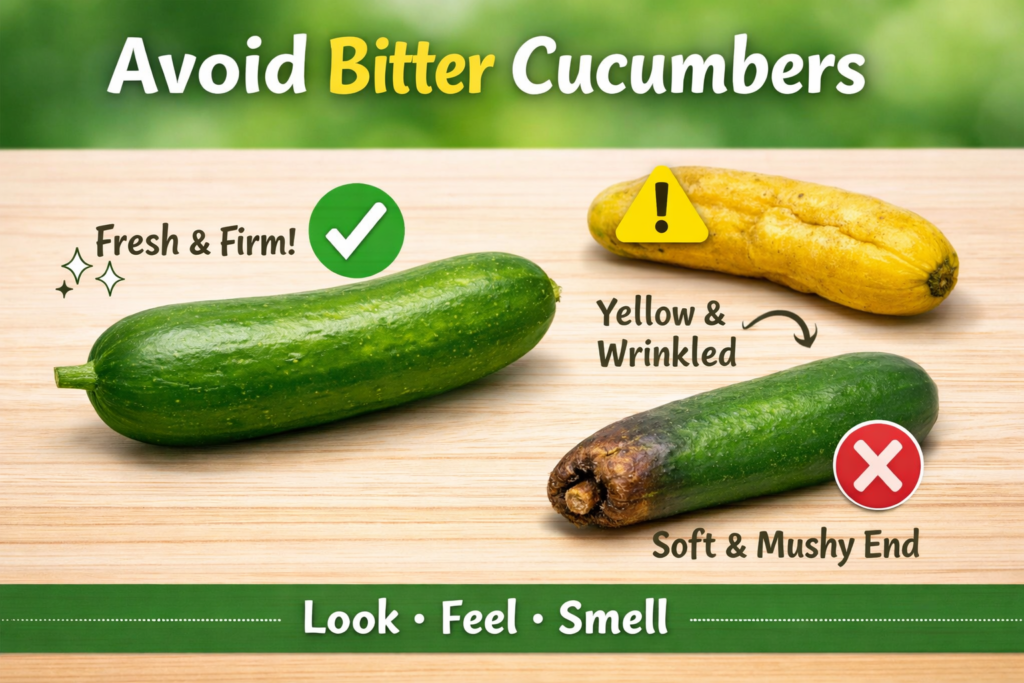
A good cucumber usually has even, bright green skin. If the color is dull, yellowish, or has brown spots, it may be overripe or starting to turn bitter. Shiny skin often means it’s fresh and recently harvested.
2. Check the ends (especially the stem end)
The stem end tells a lot. If the stem area is soft, shriveled, or brown, the cucumber might be past its best. A firm, slightly moist stem end is a good sign. When possible, buy cucumbers with a tiny bit of stem still attached.
3. Feel the firmness
Gently squeeze the cucumber. It should be firm but not rock-hard. Soft spots or a spongy feel usually mean it’s overripe and could taste bitter. Avoid cucumbers that bend easily.
4. Size matters—don’t pick the giant ones
Very large cucumbers often have more seeds and a stronger, sometimes bitter, flavor. For the mildest taste, choose medium-sized cucumbers. They’re usually crisper and less bitter.
5. Look for uniform shape
Cucumbers with odd lumps, deep ridges, or irregular shapes can be a sign of uneven growth or stress, which sometimes leads to bitterness. A straight, evenly shaped cucumber is a safer bet.
6. Smell it (yes, really)
A fresh cucumber has a light, clean scent. If it smells sour, fermented, or off in any way, skip it. This is a quick test I use when I can’t tell by sight alone.
7. Know the variety when possible
Some cucumber types are bred to be less bitter—English or Persian cucumbers, for example, are usually milder. If you can, ask the seller or check labels. It helps, especially if you’re buying for raw eating.
Quick Comparison Table
| Sign | Good | Warning |
|---|---|---|
| Skin color | Bright green | Yellow or brown spots |
| Firmness | Firm, slight give | Soft or spongy |
| Size | Medium | Very large |
| Stem end | Firm, slightly moist | Shriveled or brown |
A Few Practical Market Habits
- Buy local and in season when you can. Local cucumbers are often fresher and less likely to have developed bitterness from long storage.
- Ask the seller if they know when the cucumbers were picked. Freshly harvested ones taste better.
- Avoid pre-cut cucumbers if you can’t check them; once cut, flavor and texture change quickly.
Quick tip for home
If you do end up with a slightly bitter cucumber, peel it and remove the seeds—this often reduces bitterness a lot. I’ve done this when I needed cucumbers for a quick salad and didn’t want to waste them.
When to Walk Away
If most cucumbers in a pile show the same warning signs—yellowing, soft spots, or a sour smell—don’t buy from that batch. It’s better to wait or try another vendor. A little patience saves a ruined dish.
These tricks are simple, and you can use them together—look, feel, smell, and check size. After a few markets, you’ll start spotting the good ones without thinking. Happy shopping, and may your salads always be crisp and never bitter.