Most of us think the hard part is done once we finish brushing our teeth. Two minutes, a little mouth rinse, and we’re good to go, right?
Well, not always.
There’s a surprisingly common habit that many people do right after brushing, and dentists have been warning about it for years. The problem is that it feels completely normal, so most people never question it.
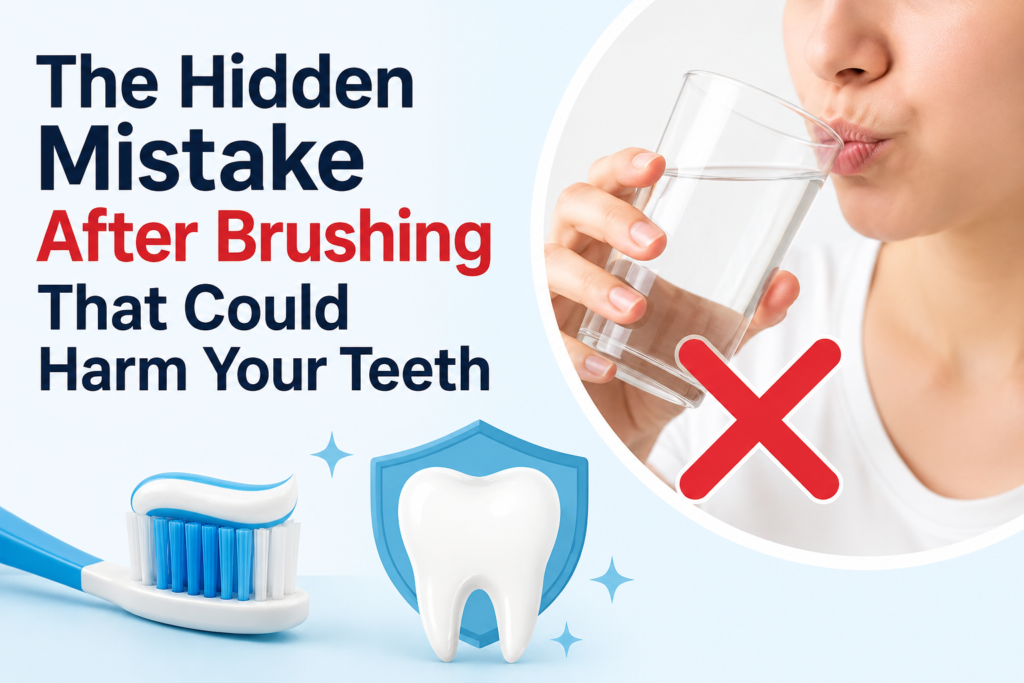
The hidden mistake? Rinsing your mouth with lots of water immediately after brushing.
It sounds harmless, but it can actually reduce the benefits of your toothpaste and leave your teeth less protected than they could be.
Why This Habit Is So Common
Think about how most of us learned to brush our teeth.
You brush, spit out the toothpaste, rinse your mouth thoroughly, and then move on with your day. It feels clean and fresh. In fact, many people believe rinsing is an important final step.
The truth is that modern fluoride toothpaste is designed to stay on your teeth for a while after brushing. When you immediately wash it away with water, you’re removing much of the protective fluoride before it has time to do its job.
That’s the part many people don’t realize.
What Fluoride Actually Does
Fluoride is one of the main reasons toothpaste helps prevent cavities.
It works by strengthening tooth enamel, which is the hard outer layer of your teeth. Throughout the day, acids from food, drinks, and bacteria can slowly weaken enamel. Fluoride helps repair and protect it.
When you rinse heavily right after brushing, much of that fluoride gets washed away.
Imagine applying sunscreen and then immediately washing it off. You wouldn’t get the full protection. The same idea applies here.
A Small Change Can Make a Difference
Dentists often recommend a simple approach:
- Brush your teeth as normal.
- Spit out the excess toothpaste.
- Avoid rinsing with water immediately afterward.
This allows a thin layer of fluoride to remain on your teeth longer.
At first, it may feel a little strange because many people are used to rinsing. But after a few days, most get comfortable with the new routine.
Another Mistake People Make After Brushing
There’s another habit that deserves attention.
Many people brush their teeth and then immediately drink orange juice, coffee, soda, or other acidic beverages.
This can be rough on your enamel.
Why Acidic Drinks Can Be a Problem
Brushing removes plaque and leaves your teeth very clean. However, your enamel can be slightly more vulnerable for a short time afterward.
Acidic drinks can soften enamel, especially if consumed immediately after brushing.
Common acidic drinks include:
| Drink | Acidic Level |
|---|---|
| Orange juice | High |
| Lemon water | High |
| Soft drinks | Very High |
| Sports drinks | High |
| Coffee | Moderate |
Waiting a little while before consuming acidic beverages can be a smarter choice for your teeth.
The “Clean Feeling” Can Be Misleading
One interesting thing about oral care is that feeling clean and being protected aren’t always the same thing.
A mouth that has been thoroughly rinsed with water may feel fresher. But from a dental health perspective, leaving fluoride behind is often more beneficial.
It’s one of those situations where what feels right isn’t necessarily what’s best.
Many people are surprised when they hear this because they’ve been rinsing after brushing for decades.
What About Mouthwash?
This question comes up a lot.
If you’re using a fluoride mouthwash, timing matters.
Using mouthwash immediately after brushing may also wash away concentrated fluoride from your toothpaste. Some dental professionals suggest using mouthwash at a different time of day, such as after lunch or later in the afternoon.
Of course, individual needs vary, so following advice from your dentist is always best.
A Simple Morning Routine
If you’re wondering what an enamel-friendly routine might look like, here’s a straightforward example:
- Brush for two minutes using fluoride toothpaste.
- Spit out the excess toothpaste.
- Avoid rinsing with water.
- Wait a little before eating or drinking if possible.
- Continue with your normal day.
Nothing complicated. Just a small adjustment.
Signs Your Teeth May Need More Protection
While this brushing mistake alone doesn’t guarantee dental problems, some signs may suggest your teeth could use extra care:
- Frequent cavities
- Tooth sensitivity
- Pain when eating cold foods
- Visible enamel wear
- Yellowing teeth caused by thinning enamel
If any of these sound familiar, it may be worth discussing your brushing habits with a dentist.
Sometimes the issue isn’t brushing too little. It’s simply doing one small thing afterward that reduces the benefits.
A Habit Worth Rethinking
It’s funny how the smallest habits often go unnoticed. People spend time choosing the right toothbrush, buying whitening products, or trying expensive dental treatments, yet a simple rinse with water after brushing can undo part of the protection they’re working for.
The next time you brush your teeth, pay attention to what happens afterward. That final step might matter more than you think.
Many people never hear about this until a dentist points it out. Once they do, it’s usually an easy change to make—and one that may help keep their teeth healthier for years to come.