Many people start a fitness journey with a simple idea: the more workouts, the better the results.
At first, it seems to make sense. If exercising three days a week is good, then seven days must be even better, right?
Not exactly.
One of the biggest mistakes people make is treating rest as something unnecessary. In reality, recovery days are an important part of getting stronger, fitter, and healthier. They’re not a sign of laziness. They’re actually part of the process.
If you’ve ever felt unusually tired, sore for days, or completely unmotivated to exercise, your body might have been asking for recovery long before you realized it.
What Happens During a Recovery Day?
A lot of people think nothing happens when they’re resting. The truth is, your body is quite busy.
During workouts, especially strength training or intense cardio sessions, your muscles experience small amounts of stress. Tiny muscle fibers break down. This sounds alarming, but it’s completely normal.
Recovery is the period when your body repairs those muscles and adapts to the training you’ve done.
Without enough recovery, your body keeps accumulating fatigue. Over time, performance can start moving backward instead of forward.
Think about it this way. You don’t get stronger while lifting weights. You get stronger while recovering from lifting weights.
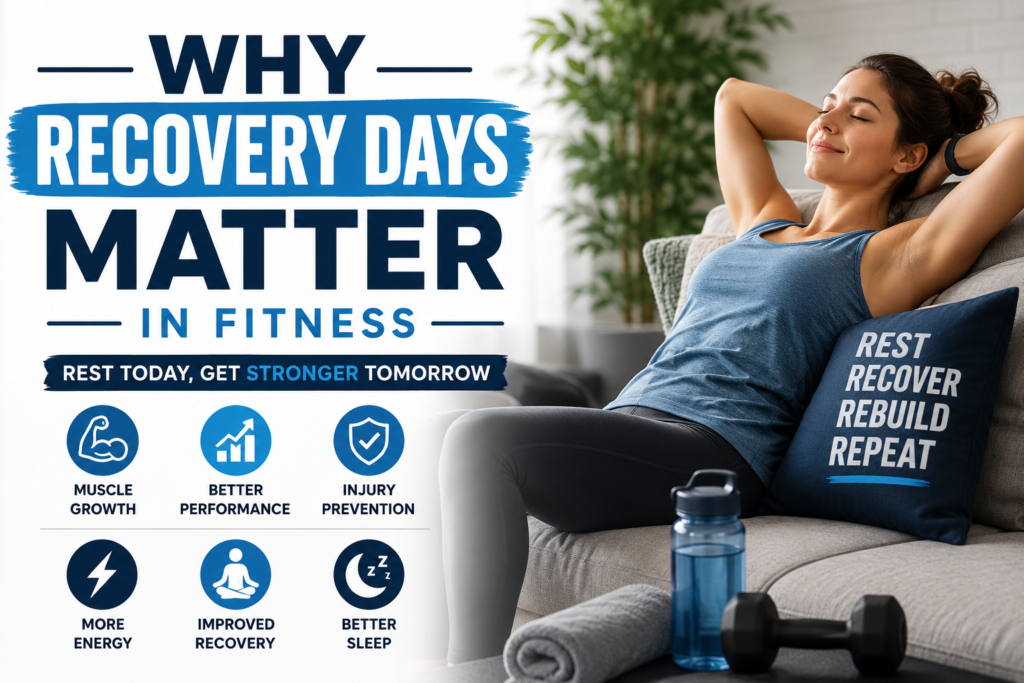
Recovery Isn’t Always Sitting on the Couch
The word “rest” can be a little misleading.
A recovery day doesn’t necessarily mean spending the entire day doing nothing. Sometimes light movement can actually help your body feel better.
Examples of active recovery include:
- Easy walking
- Gentle cycling
- Stretching
- Yoga
- Light mobility exercises
Many people notice that a relaxed walk on a recovery day helps reduce stiffness better than staying in bed all day.
The Link Between Recovery and Muscle Growth
One thing beginners often find surprising is that muscles grow during recovery, not during workouts.
When you challenge your muscles, your body responds by rebuilding them stronger than before. But this process takes time.
If you train the same muscle groups intensely every single day, you’re not giving them the opportunity to fully recover.
A Simple Example
Imagine painting a wall.
You apply one coat and then immediately try to add another before it dries. The result usually isn’t great.
Muscle recovery works in a similar way. Your body needs time between intense sessions to do its job properly.
Recovery Days Can Help Prevent Injuries
This is probably one of the most overlooked benefits.
When fatigue builds up, form and technique often suffer. A runner may start landing differently. A lifter may lose proper posture. Small mistakes begin to happen.
That’s when injuries become more likely.
Common problems associated with inadequate recovery include:
| Potential Issue | Possible Cause |
|---|---|
| Muscle strains | Overworked muscles |
| Joint pain | Repetitive stress |
| Tendon irritation | Lack of recovery time |
| Persistent soreness | Excessive training volume |
Nobody enjoys taking weeks off because of an injury. A planned recovery day is much easier than an unplanned break caused by pain.
Better Performance Often Starts With More Rest
This sounds backward, but many experienced athletes understand it well.
Sometimes the solution to stalled progress isn’t another workout. It’s recovery.
Have you ever taken a day off and returned feeling surprisingly strong?
That’s because fatigue had a chance to decrease.
Many people report that after a proper recovery day they can:
- Lift heavier weights
- Run faster
- Feel more energetic
- Focus better during workouts
- Enjoy training more
Your body performs best when it is challenged and allowed to recover.
Recovery Helps More Than Just Your Muscles
Fitness isn’t only physical.
Hard training also places demands on your nervous system and mental energy.
After several intense workout days in a row, some people feel unusually irritable, tired, or unmotivated. They may start skipping workouts altogether because exercise begins to feel like a chore.
Recovery days can help restore that mental freshness.
A relaxed day of walking, stretching, or simply getting extra sleep can make a noticeable difference.
Don’t Ignore Sleep
If recovery had a superstar, it would probably be sleep.
During sleep, the body releases important hormones involved in muscle repair and recovery. Poor sleep can make even a well-designed fitness program less effective.
Many people spend hundreds of dollars on supplements while overlooking the simplest recovery tool available: getting enough sleep consistently.
Signs You Might Need a Recovery Day
Sometimes your body gives clear signals.
You may benefit from extra recovery if you notice:
- Constant muscle soreness
- Low energy throughout the day
- Reduced workout performance
- Trouble sleeping
- Lack of motivation to exercise
- Elevated fatigue during normal activities
Occasional tiredness is normal. But when these signs persist, it may be time to slow down for a day or two.
Finding the Right Balance
There isn’t one perfect recovery schedule that works for everyone.
A beginner exercising three times per week may need less recovery than someone doing intense training six days a week.
Age, sleep quality, nutrition, stress levels, and workout intensity all play a role.
For most people, including at least one or two recovery days each week is a practical approach. Some weeks may require more, and that’s perfectly okay.
Fitness isn’t about pushing as hard as possible every single day. It’s about creating a routine that your body can handle for months and years. The people who make long-term progress are usually the ones who understand that recovery isn’t taking time away from fitness—it’s part of fitness itself.