
Trying to lose weight often feels confusing. One day people say you should skip breakfast, the next day someone recommends eating five meals a day. Social media is full of new tricks, and honestly, it’s hard to know which ones are worth trying.
One idea that has become popular recently is the 30-30-30 weight loss rule. It sounds simple, doesn’t require expensive supplements, and doesn’t ask you to spend hours at the gym. That alone is probably why so many people are talking about it.
But does it actually help? While it’s certainly not a magic solution, many nutrition experts believe it can be a practical morning habit that supports healthy weight loss when combined with a balanced lifestyle.
What Is the 30-30-30 Weight Loss Rule?
The rule is easy to remember because everything revolves around the number 30.
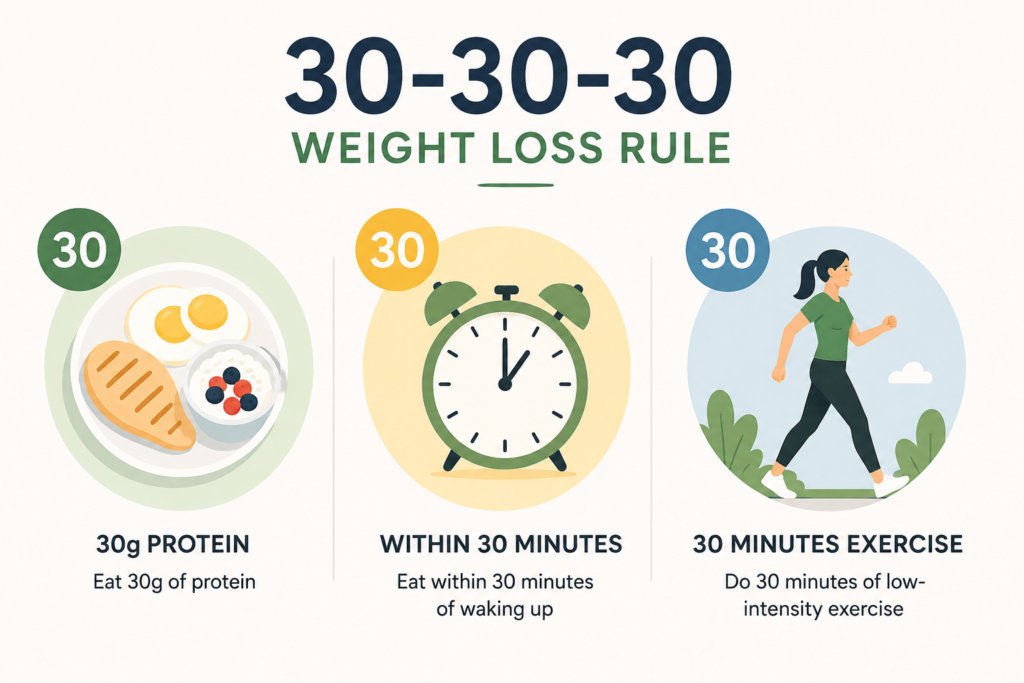
The basic idea is:
- Eat 30 grams of protein
- Within 30 minutes of waking up
- Follow it with 30 minutes of low-intensity exercise
That’s it. No complicated meal plans or impossible workout schedules.
The goal is to start your day with enough protein while getting your body moving at a comfortable pace. Over time, this routine may help control hunger, improve energy levels, and make it easier to stick with healthy eating throughout the day.
Why Protein Comes First
A High-Protein Breakfast Can Keep You Full Longer
Protein is one of the most filling nutrients. After a breakfast rich in protein, many people notice they don’t feel hungry again quite as quickly.
That means fewer random snacks before lunch and less temptation to reach for sugary foods when energy drops.
Some easy ways to reach around 30 grams of protein include:
- Eggs with Greek yogurt
- Cottage cheese and fruit
- Protein smoothie with milk and nuts
- Grilled chicken or tofu with whole-grain toast
- Paneer scramble with vegetables
You don’t have to eat the exact same breakfast every day. The idea is simply to make protein the star of your morning meal.
Why Eat Within 30 Minutes?
This part gets people talking because not everyone wakes up feeling hungry.
The thinking behind eating within 30 minutes is that it provides your body with fuel after an overnight fast. Starting the day with a balanced meal may also help regulate appetite later on.
That said, this isn’t a strict rule for everyone. If you’re genuinely not hungry right after waking up, forcing yourself to eat probably isn’t necessary. Listening to your body still matters.
Many dietitians suggest aiming for a nutritious breakfast soon after waking instead of worrying about hitting the clock exactly.
The Last 30: Gentle Exercise
You Don’t Need an Intense Workout
This may be the best part of the routine.
The exercise isn’t meant to leave you exhausted. Instead, it focuses on low-intensity movement, such as:
- A brisk walk
- Easy cycling
- Light jogging
- Gentle yoga
- Walking on a treadmill
- Casual swimming
The goal is to keep moving while still being able to hold a conversation.
Many people actually find morning walks relaxing. Fresh air, a little sunshine, and steady movement can make the whole day feel more productive.
Can the 30-30-30 Rule Really Burn Fat Faster?
Here’s where it’s important to stay realistic.
The routine itself doesn’t magically melt body fat. Weight loss still depends on burning more calories than you consume over time.
However, this habit may support fat loss in several indirect ways.
A protein-rich breakfast may reduce cravings during the day. Low-intensity exercise adds extra calorie burn without feeling overwhelming. Following the same healthy routine every morning also creates consistency, and consistency is usually what brings lasting results.
In other words, the 30-30-30 rule works best because it encourages healthier daily habits—not because the number 30 has any special power.
Who May Benefit Most?
This routine may be especially helpful for people who:
- Often skip breakfast
- Struggle with late-morning hunger
- Want a simple fitness habit
- Prefer walking instead of intense workouts
- Are looking for sustainable weight loss rather than quick fixes
If your mornings are usually rushed, even making small changes can make a noticeable difference over several weeks.
A Few Things to Keep in Mind
The 30-30-30 rule isn’t perfect for everyone.
People with diabetes, kidney disease, certain digestive conditions, or those following a medically prescribed diet should check with their healthcare provider before making significant dietary changes, especially if increasing protein intake.
Also, don’t stress if you miss a day. Real life gets busy. One skipped morning won’t ruin your progress.
Small Habits Often Beat Big Promises
The biggest strength of the 30-30-30 rule is its simplicity. Instead of chasing complicated diet plans, it encourages three healthy actions that many people can realistically fit into everyday life.
If you combine this morning routine with balanced meals, enough sleep, regular movement, and good hydration, you’re far more likely to see steady progress than by relying on trendy “fat-burning” shortcuts.
Weight loss rarely happens overnight. But sometimes, a simple morning habit is exactly what helps people stay on track for the long run.