When people think about lung damage, smoking is usually the first thing that comes to mind. And yes, smoking is one of the biggest causes of lung disease. But here’s the thing—not every lung problem starts with a cigarette.
Your lungs work every second of the day. They quietly filter the air you breathe, delivering oxygen to every part of your body. Because they’re always working, they’re also exposed to many things that most of us don’t even notice.
You could be living a healthy lifestyle, never touching a cigarette, and still be exposing your lungs to harmful things every day.
Some of these risks are hiding right inside our homes. Others come from places we visit without giving them much thought. Knowing what they are is the first step toward protecting your lungs for years to come.
H2: Your Lungs Face More Than Just Cigarette Smoke
Many everyday habits and environments can slowly affect lung health. The damage doesn’t usually happen overnight, which is why these risks are easy to ignore.
Let’s look at a few that deserve more attention.
H3: 1. Secondhand Smoke
Even if you don’t smoke, breathing someone else’s cigarette smoke can still affect your lungs.
Secondhand smoke contains thousands of chemicals, many of which are known to irritate the lungs. Regular exposure may increase the risk of breathing problems, asthma attacks, and long-term lung disease.
If someone smokes inside your home or car, opening a window isn’t enough to remove all the harmful particles.
H3: 2. Indoor Air Pollution
Most people worry about outdoor pollution, but indoor air can sometimes be worse.
Cooking without proper ventilation, burning candles every day, using wood-burning stoves, incense sticks, or even certain cleaning sprays can release tiny particles into the air.
You may not notice them, but your lungs certainly do.
Using an exhaust fan or simply opening windows while cooking can make a surprising difference.
H3: 3. Dust at Home and Work
Dust isn’t just annoying—it can carry tiny particles, mold spores, chemicals, and allergens.
If you work in construction, woodworking, farming, or factories, you may breathe in much more dust than you realize. Even at home, old carpets, cluttered storage areas, and poor ventilation can increase exposure.
Wearing proper protective masks in dusty environments isn’t overreacting. It’s simply protecting your lungs.
H2: Everyday Habits That Can Affect Lung Health
Sometimes, the problem isn’t what we breathe once. It’s what we breathe every single day.
H3: 4. Air Pollution Outside
Busy roads, traffic, industrial areas, and wildfire smoke can all reduce air quality.
On days when pollution levels are high, people with asthma or allergies often notice symptoms first. But even healthy adults may experience irritation after repeated exposure.
If possible, avoid outdoor exercise during heavy traffic hours or when air quality is poor.
H3: 5. Mold Inside the House
A small patch of mold behind a cupboard or near a bathroom ceiling might not seem like a big issue.
But mold releases tiny spores into the air. For some people, breathing these spores can trigger allergies, coughing, wheezing, or worsen asthma.
Keeping damp areas dry and fixing water leaks early can help prevent mold from spreading.
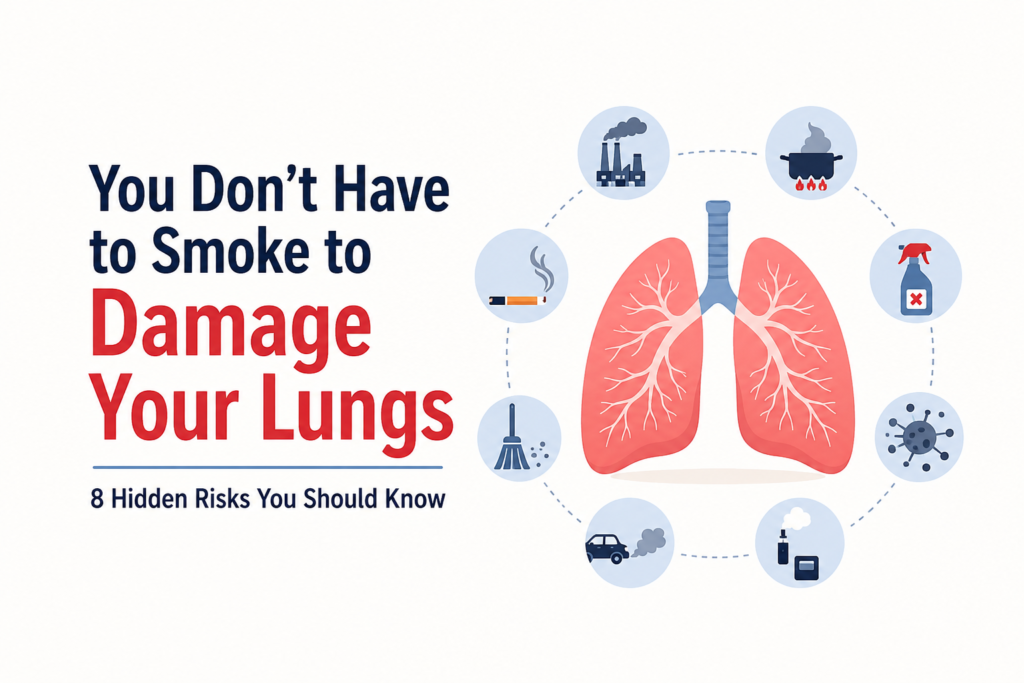
H3: 6. Chemical Fumes
Strong household cleaners, paint, glue, pesticides, and certain hobby materials often release fumes that irritate the lungs.
You don’t have to stop using these products completely. Just make sure the room is well ventilated, wear protection if needed, and avoid mixing cleaning products together.
Sometimes a fresh-smelling room isn’t necessarily a healthy one.
H2: A Few Risks Many People Overlook
These next two are less obvious, but they can still matter.
H3: 7. Vaping Isn’t Risk-Free
Some people switch to vaping because they believe it’s harmless.
While research is still ongoing, experts agree that vaping isn’t simply “water vapor.” Many products contain chemicals and tiny particles that may irritate or damage the lungs over time.
If you don’t already vape, there’s really no health benefit to starting.
H3: 8. Ignoring Respiratory Infections
Many people brush off a lingering cough after a cold or flu.
Usually, it gets better. But sometimes infections can affect the lungs more seriously, especially in older adults or people with existing health conditions.
If you have a cough that lasts several weeks, chest pain, shortness of breath, or coughing up blood, don’t just wait and hope it disappears. It’s worth getting checked by a healthcare professional.
H2: Small Habits That Help Protect Your Lungs
The good news is that protecting your lungs doesn’t always require major lifestyle changes.
Simple habits can make a real difference over time.
- Keep your home well ventilated while cooking.
- Avoid secondhand smoke whenever possible.
- Wear protective masks in dusty workplaces.
- Clean mold and fix water leaks quickly.
- Check local air quality before exercising outdoors.
- Use household chemicals carefully and in ventilated areas.
- Stay physically active to support healthy lung function.
- Seek medical advice if breathing problems don’t improve.
Your lungs don’t ask for much, but they do benefit from a little attention. We often notice them only when something feels wrong—a cough that won’t go away, getting out of breath too easily, or feeling tightness in the chest.
The truth is, many of the things that affect lung health aren’t dramatic. They’re part of everyday life. Paying attention to these hidden risks now can help keep your lungs healthier, whether you’ve ever smoked or not.