If you’ve ever stood up after working at a desk for hours and felt like your neck had turned into a block of wood, you’re definitely not alone. Neck and back pain have become so common that many people almost treat them as a normal part of life. But they shouldn’t be.
The good news is that you don’t always need fancy equipment or a gym membership to feel better. A few gentle stretches, done regularly, can reduce stiffness, improve movement, and even prevent pain from coming back. The key is to move slowly and never force your body into uncomfortable positions.
Let’s look at some easy stretches that you can do at home, in the office, or even during a short break.
Why Stretching Helps Neck and Back Pain
When we spend hours sitting, driving, or looking down at our phones, the muscles around the neck, shoulders, and back become tight. Over time, this tightness can lead to soreness, poor posture, and limited movement.
Stretching helps by:
- Improving flexibility
- Reducing muscle tension
- Increasing blood flow
- Supporting better posture
- Helping your body move more comfortably
You don’t need to stretch for an hour every day. Even 10 to 15 minutes can make a noticeable difference if you stay consistent.
Best Stretches for Neck Pain
1. Neck Side Stretch
This simple stretch works well if your neck feels tight after sitting for a long time.
How to do it:
- Sit or stand with your back straight.
- Slowly tilt your head toward one shoulder.
- Keep the opposite shoulder relaxed.
- Hold for 20–30 seconds.
- Repeat on the other side.
Don’t pull your head too hard with your hand. A gentle stretch is enough.
2. Chin Tuck
This exercise helps improve posture and reduces strain caused by looking at screens all day.
How to do it:
- Sit upright.
- Pull your chin straight back as if making a double chin.
- Keep your eyes looking forward.
- Hold for 5 seconds.
- Repeat 10 times.
It feels a little funny the first time, but many people notice relief after doing it regularly.
3. Neck Rotation
This keeps the neck joints moving smoothly.
How to do it:
- Turn your head slowly toward one shoulder.
- Hold for about 15 seconds.
- Return to the centre.
- Repeat on the other side.
Move gently. If you feel sharp pain, stop immediately.
Best Stretches for Back Pain
1. Cat-Cow Stretch
This is one of those stretches that almost everyone enjoys because it loosens the entire spine.
How to do it:
- Start on your hands and knees.
- Arch your back while looking slightly upward.
- Then round your back while tucking your chin.
- Continue slowly for 8–10 rounds.
Take your time with each movement instead of rushing through it.
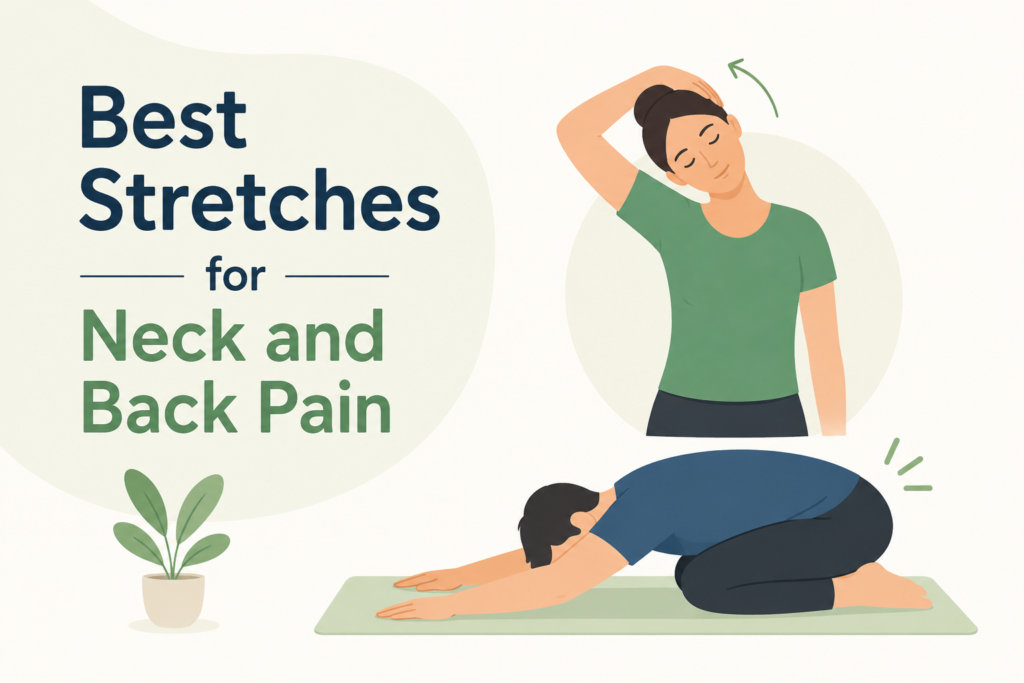
2. Child’s Pose
This gentle yoga stretch relaxes the lower back, hips, and shoulders.
How to do it:
- Kneel on the floor.
- Sit back on your heels.
- Stretch your arms forward.
- Lower your chest toward the floor.
- Hold for 30–60 seconds while breathing slowly.
Many people say this stretch feels especially good after a long day at work.
3. Knee-to-Chest Stretch
If your lower back feels stiff in the morning, this stretch can help.
How to do it:
- Lie on your back.
- Pull one knee toward your chest.
- Hold for 20–30 seconds.
- Switch legs.
- Then bring both knees to your chest together if comfortable.
Keep your shoulders relaxed throughout the stretch.
4. Seated Spinal Twist
A gentle twist helps improve spinal mobility.
How to do it:
- Sit on a chair or the floor.
- Turn your upper body slowly to one side.
- Hold for 20 seconds.
- Repeat on the opposite side.
Avoid twisting too far. The movement should feel comfortable, not painful.
H2: A Few Small Habits That Make These Stretches Work Better
Stretching is helpful, but what you do during the rest of the day matters too.
H3: Get Up More Often
If you’re working on a computer, stand up every 30 to 60 minutes. Walk around for a minute or two before sitting again. It sounds simple, but it really helps prevent stiffness.
H3: Watch Your Screen Position
Your monitor should be close to eye level. Looking down for hours puts extra pressure on your neck muscles.
H3: Don’t Hold Your Breath
A lot of people do this without noticing. Slow breathing helps muscles relax, making stretches more effective.
H3: Stay Consistent
Doing a few stretches every day is much better than doing a long session once a week. Think of it like brushing your teeth—small daily habits usually work best.
When You Should See a Doctor
Stretching can help with everyday muscle tightness, but it isn’t the answer for every type of pain.
It’s a good idea to seek medical advice if:
- Pain lasts for several weeks without improving.
- You feel numbness or tingling in your arms or legs.
- Pain spreads down the leg or arm.
- You notice weakness in your muscles.
- The pain starts after a fall or an injury.
These symptoms may need proper medical evaluation before starting an exercise routine.
Neck and back pain can make even simple daily tasks feel harder than they should. The encouraging part is that gentle stretching often brings noticeable relief when practiced regularly. You don’t have to do every stretch perfectly or spend a lot of time. Start with two or three that feel comfortable, keep your movements slow, and make them part of your daily routine. Over time, your body usually thanks you for those few extra minutes of care.