
Sleep is one of those things people often take for granted—until they stop getting enough of it.
Most of us have had those mornings when we wake up feeling tired even after spending hours in bed. The coffee doesn’t seem to help much, concentration feels impossible, and even simple tasks feel harder than they should.
What’s interesting is that many people focus heavily on eating healthy and exercising regularly, but sleep often gets pushed to the bottom of the priority list. We stay up watching videos, scrolling through social media, finishing work, or simply trying to squeeze a little more out of the day.
The problem is that sleep isn’t just downtime. It’s one of the most important things your body does for itself every single day.
Sleep Affects More Than Just Energy Levels
Most people associate sleep with feeling rested. That’s true, but it’s only part of the story.
While you’re asleep, your body is carrying out countless tasks behind the scenes. Muscles recover, hormones balance themselves, and the brain processes information collected throughout the day.
Have you ever noticed how everything seems more difficult after a poor night’s sleep?
Small problems feel bigger. Patience disappears faster. You might even feel hungry more often.
That’s because sleep influences far more than energy.
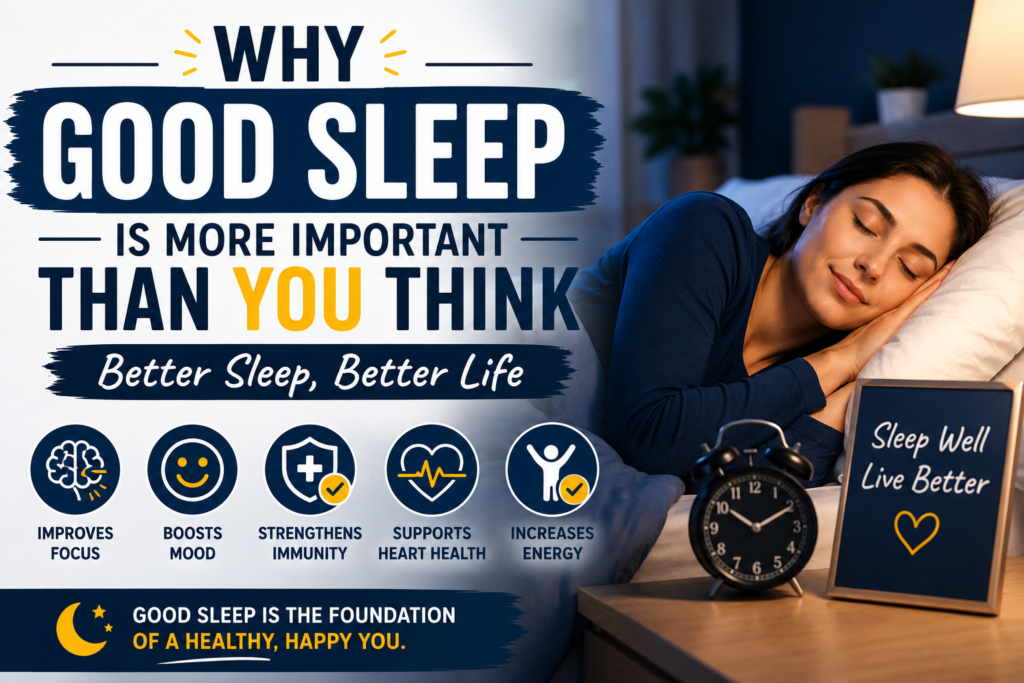
Your Brain Needs Sleep to Function Properly
Think about how a phone starts slowing down when too many apps are running.
The brain isn’t exactly the same, but lack of sleep can create a similar feeling. Mental fog, slower thinking, forgetfulness, and difficulty focusing are all common after poor sleep.
Students often experience this before exams. Many stay awake late studying, believing they’re gaining extra preparation time. The next day, they struggle to concentrate because their brains haven’t had enough rest.
Sometimes an extra hour of sleep can be more useful than an extra hour of studying.
The Connection Between Sleep and Mood
One thing that doesn’t get enough attention is how closely sleep and emotions are connected.
After a bad night’s sleep, people are often:
- More irritable
- Less patient
- More stressed
- Easily frustrated
- Less motivated
You might not even realize sleep is the reason.
It’s easy to blame a difficult day, work pressure, or other people when the real issue started the night before.
Why Everything Feels Harder When You’re Tired
When you’re exhausted, your brain has fewer resources available to handle stress.
That’s why situations that normally wouldn’t bother you suddenly feel overwhelming.
Many people notice that after a good night’s sleep, problems that seemed huge the previous evening suddenly feel much more manageable.
Good Sleep Supports Physical Health
Sleep isn’t only about mental performance.
Your body relies on quality sleep to stay healthy.
During sleep, important repair processes take place. This is one reason athletes and fitness enthusiasts often talk about recovery. Exercise challenges the body, but sleep is when much of the rebuilding happens.
Here’s a simple overview:
| Area of Health | How Sleep Helps |
|---|---|
| Energy Levels | Restores physical and mental energy |
| Muscle Recovery | Supports repair and growth |
| Immune System | Helps the body fight illness |
| Heart Health | Supports healthy cardiovascular function |
| Weight Management | Helps regulate appetite hormones |
When sleep becomes a regular problem, these areas can gradually be affected.
Sleep and Weight Are More Connected Than People Think
This often surprises people.
When you’re tired, your body may crave more high-calorie foods. Sugary snacks and fast food suddenly seem much more appealing.
At the same time, lack of sleep can leave you feeling too exhausted to exercise or stay active.
It’s not difficult to see how this combination can become a challenge over time.
Late Nights Often Lead to Extra Eating
Think about it.
The longer you’re awake, the more opportunities there are to snack.
Many people have experienced standing in front of the refrigerator late at night even though they weren’t particularly hungry.
Better sleep habits often help reduce these unnecessary eating patterns naturally.
Quality Matters, Not Just Hours
People often focus entirely on the number of hours they sleep.
Hours matter, but sleep quality matters too.
Someone who sleeps eight interrupted hours may feel worse than someone who sleeps seven hours of uninterrupted, restful sleep.
Common habits that can reduce sleep quality include:
- Using phones in bed
- Drinking excessive caffeine late in the day
- Irregular sleep schedules
- Working right before bedtime
- Sleeping in a noisy environment
Small improvements in these areas can sometimes make a surprisingly big difference.
Signs You May Not Be Getting Enough Sleep
The signs aren’t always obvious.
Many people become so used to feeling tired that they assume it’s normal.
Some common indicators include:
- Difficulty concentrating
- Frequent yawning throughout the day
- Low motivation
- Mood swings
- Reliance on caffeine to stay alert
- Feeling tired shortly after waking up
If these symptoms happen regularly, sleep may deserve a closer look.
Building Better Sleep Habits
Good sleep doesn’t usually come from one magic solution.
It’s often the result of simple habits practiced consistently.
Small Changes That Can Help
A few practical habits include:
- Going to bed at the same time each night
- Limiting screen use before bed
- Keeping your bedroom cool and comfortable
- Avoiding heavy meals late at night
- Getting natural sunlight during the day
- Creating a relaxing bedtime routine
None of these habits is particularly exciting. Yet they often work better than people expect.
In a world that constantly encourages us to do more, stay connected longer, and sleep less, good sleep can feel almost underrated. But when you consistently sleep well, everyday life tends to feel smoother. Your mind is clearer, your body feels stronger, and even ordinary tasks require less effort. That’s why sleep isn’t simply a nightly habit—it’s one of the foundations of good health.